The Federal Reserve Rescued Corporations — And Let the Rest of Us Suffer
The Federal Reserve has chosen to give powerful corporations like Chevron far better lending terms than the state of Wisconsin. There's no reason the Fed can't lend to state and local governments at zero percent interest.
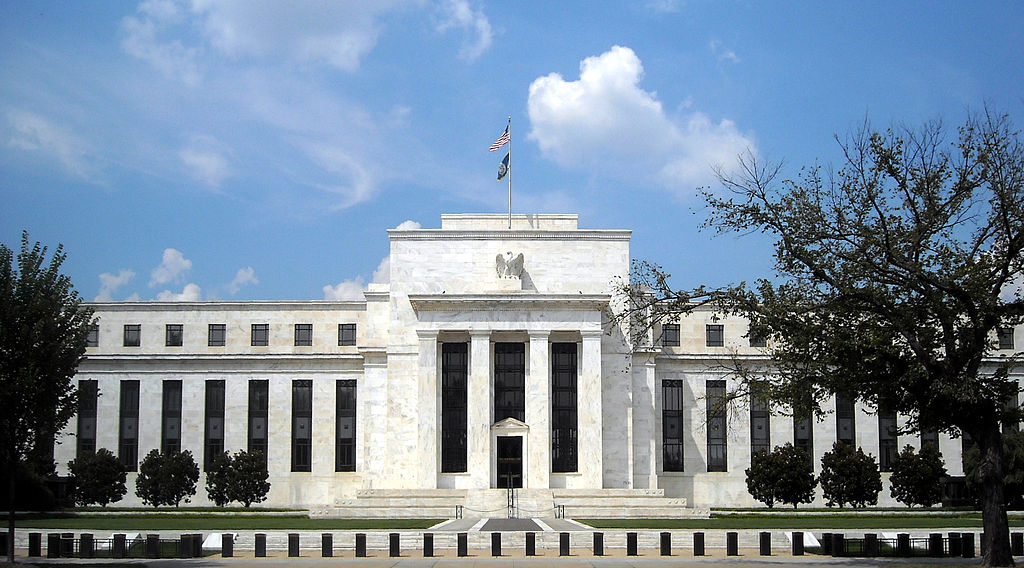
The Federal Reserve building in Washington, DC.
In mid-September, the Federal Reserve faced a simple question from regulators: Why are profitable corporations being offered money from the central bank at a far cheaper interest rate than local communities? In one instance, Chevron was able to borrow money at half the rate as Wisconsin — meaning the oil giant was effectively getting a government subsidy, while state taxpayers were being offered a predatory rate. Why?
Fed officials had few answers and still haven’t addressed the iniquity. The result is a perverse dynamic: cheap Fed cash is boosting corporate profits, stock prices, shareholder dividends, and executive pay, all while budget-strapped states and cities are being forced to choose between high-interest loans or mass layoffs of teachers, firefighters, emergency workers, and other public-sector employees during a deadly pandemic.
It doesn’t have to be this way, according to a coalition of lawmakers and grassroots groups that have launched a campaign for reform. Their demands are straightforward: they want the Fed to use its authority to make long-term loan commitments to cities and states at 0 percent interest — the rate that the Fed already lends to Wall Street banks. Proponents say that would allow municipalities to avoid mass layoffs and also save $160 billion in annual interest payments they pay Wall Street firms on their past debt.