Trump Has Been Quietly Setting the Stage for an Authoritarian Second Term
Since Donald Trump’s election, hyperbolic warnings about a descent into fascism have been constant background noise, even as he has repeatedly shown his weakness. But that noise has made it harder to hear the alarming signals of the past several months, as the White House has prepared the ground for a major power grab in a second Trump term.
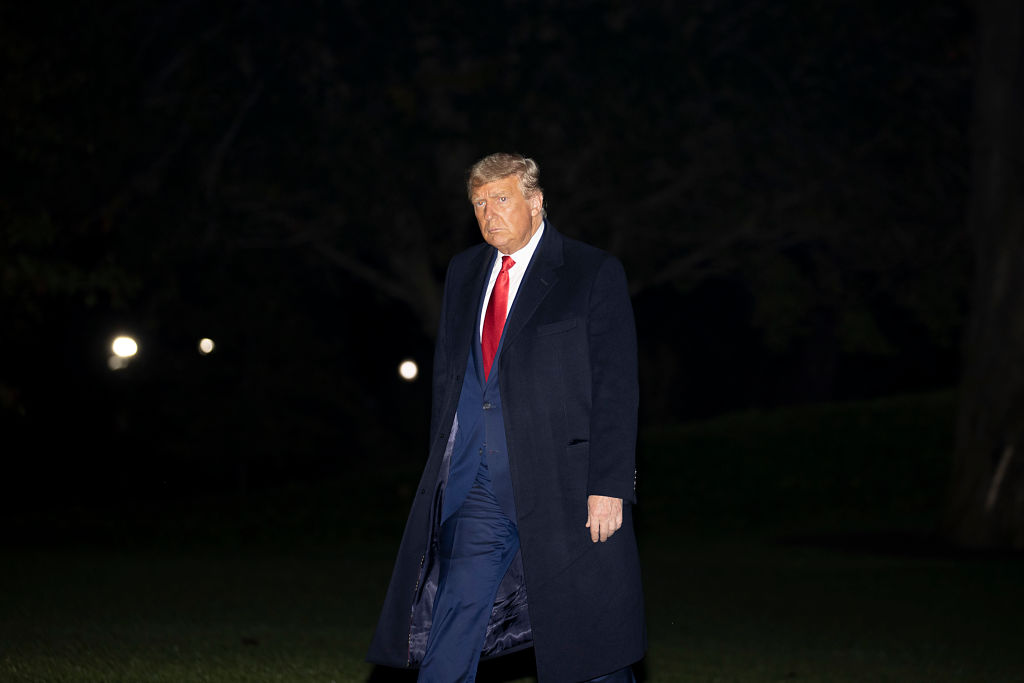
President Donald Trump walks on the south lawn of the White House on October 20, 2020 in Washington, DC. (Tasos Katopodis / Getty Images)
For most of Donald Trump’s disastrous presidency, the words “authoritarian” and “dictator” have been so cynically thrown around by his political opponents, it’s been hard to gauge how much to take it all seriously.
On the one hand, Trump has clear authoritarian tendencies in his rampant flouting of rules and laws, his encouragement of violence and hostility toward political opponents and democratic institutions, the cult of personality that surrounds him, and his threats of state violence against nonviolent protesters.
On the other, he has largely governed as, in Barton Gellman’s words, “a weak authoritarian,” while some of his most headline-grabbing acts of despotic-type behavior — his efforts to prosecute Julian Assange and various whistleblowers, suppress the vote, go after political dissidents, and use executive orders as an end run around Congress — are largely in line with, if escalations of, the actions of previous presidents and other parts of the US political spectrum.