Spain’s First Communist Minister Since the 1930s: “The Right Can’t Accept a Party Like Ours in Government”
This January, a pact between the Socialists and Unidas Podemos gave Spain its first ruling left-wing coalition since the Civil War. One of two communist ministers, Alberto Garzón, spoke to Jacobin about the government’s survival in these times of crisis — and why the militant right still refuses to accept its legitimacy.
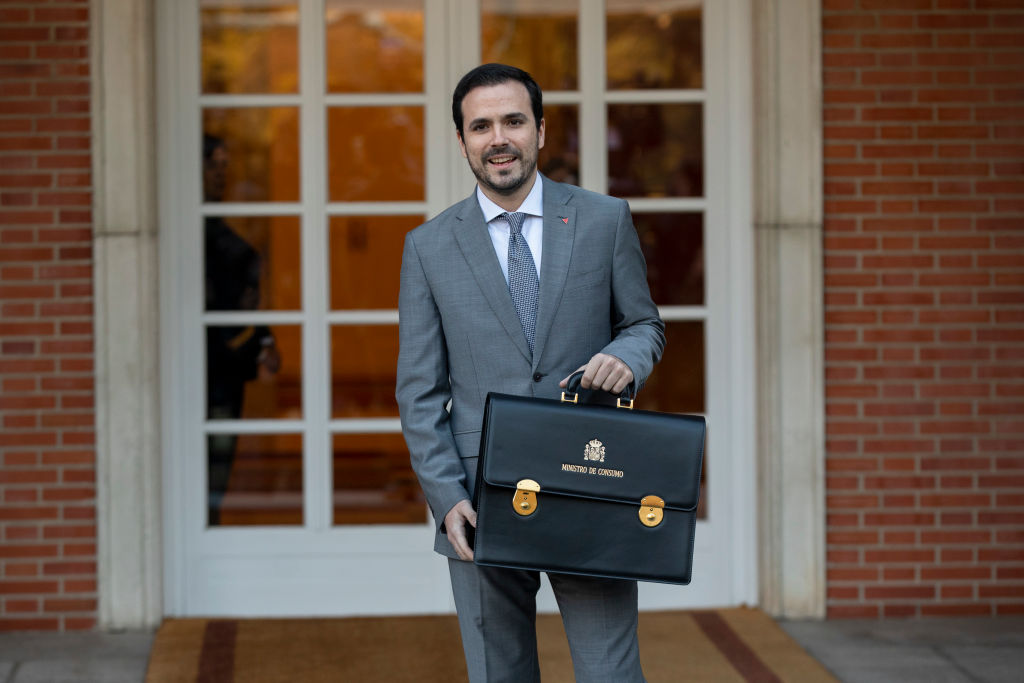
Spain’s minister of Consumer Affairs, Alberto Garzón, before the first council meeting at Moncloa Palace on January 14, 2020 in Madrid, Spain. Pablo Blazquez Dominguez / Getty
In January, Izquierda Unida (IU) leader Alberto Garzón and his comrade Yolanda Díaz became Spain’s first communist ministers since the Second Republic of the 1930s. Garzón took on the newly created Consumer Affairs ministerial role, while Díaz headed the Labor Ministry. They were joined in cabinet by multiple colleagues from the wider Unidas Podemos grouping, of which IU is part — most notably deputy prime minister Pablo Iglesias – as the radical left alliance reached a coalition agreement with Pedro Sánchez’s center-left Socialist Party (PSOE).
None of these newly sworn-in ministers could anticipate what was to follow. Only two months after entering office, the coalition was faced with the full force of the coronavirus pandemic’s initial outbreak, as Madrid became one of the epicenters for the virus in Europe. The crisis this spring demanded emergency measures — and negotiations over a response at the European level. But the government now enters a new phase of the effort to contain COVID-19, as a renewed surge in Spain’s infection rates threatens to collapse the primary care system in the capital and brings forward the prospect of fresh restrictions — and even a possible second lockdown.
But the coronavirus crisis isn’t the only problem hanging over Garzón and his colleagues. Aside from the relative conservatism of its larger coalition partner in the PSOE, further limits to Unidas Podemos’s agenda owe to the unreliable support coming from the government’s fragmented parliamentary majority, which currently depends on various smaller regional parties to make up the numbers.