Spain’s Former King Has Fled, But His Cronyism Remains
On Sunday night, Spain’s former king Juan Carlos fled the country in order to evade prosecution over mass-scale money laundering. Once hailed as a leader of the transition away from dictatorship, the monarch’s corrupt dealings show how Spain's powerful business interests continue to stand above democratic scrutiny.
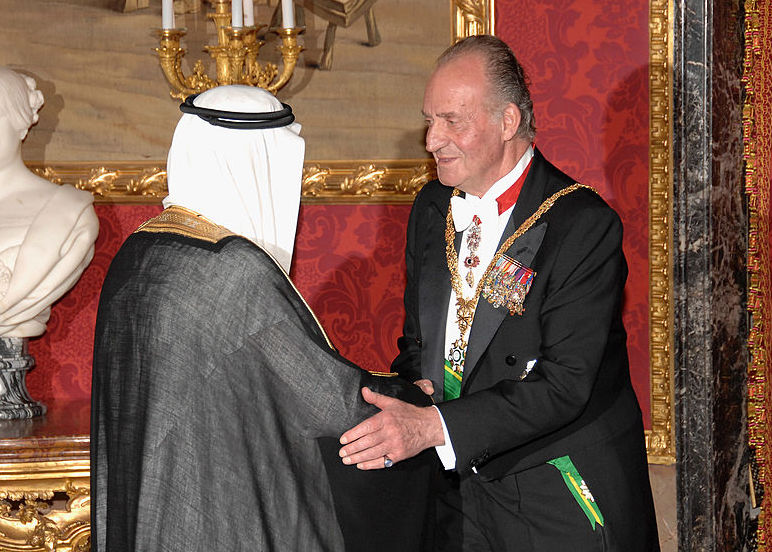
King Juan Carlos of Spain receives Saudi King Abdullah for a gala dinner in Spain, 2007. (Carlos Alvarez / Getty Images)
Juan Carlos de Borbón is the only man whose name appears in Spain’s 1978 Constitution. Yet on Sunday night, the former king was forced to flee Spain as evidence builds up of his financial scandals. After crossing over to Portugal he boarded a private jet to the Dominican Republic, where he is now in exile.
Recent revelations into a series of massive illegal payments he received from Arab royal families and Spanish CEOs had left Juan Carlos increasingly vulnerable to prosecution, in both Spain and Switzerland. Particularly damaging was last week’s news that a €62 million London penthouse had been “gifted” to him by Oman’s royal family and then rapidly resold, in an act of apparent money laundering.
Since this occurred after his abdication in 2014, it would not be covered by the sweeping immunity Juan Carlos had enjoyed as king. But the scope of the allegations against him and his sudden escape have raised much wider questions about the legitimacy of the monarchy and the post-Franco order known to Spaniards as the ’78 regime.