How Local Civil Rights Protests Produced an Increase in War on Poverty Spending
Three social scientists crunched the numbers and found that counties where the Civil Rights Movement was active received almost 50 percent more War on Poverty spending than those counties that didn’t — and the more active the movement, the more funding received. It confirms what the Left has long argued: protests get the goods.
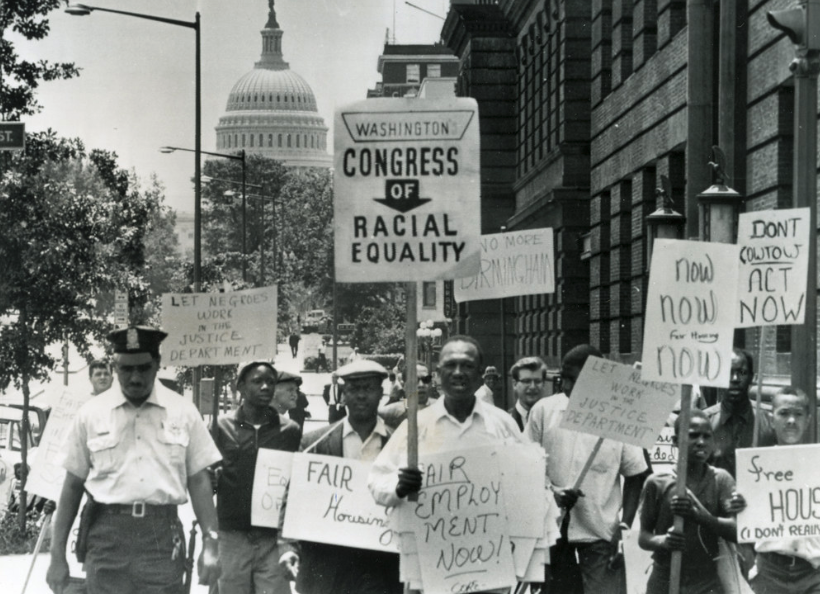
People marching in a National Negro Congress protest against Georgia lynching cases in July 1946. (Flickr)
Black political organizing of the 1960s sought much more than just civil rights. For most community organizers, the struggle against white supremacy was inextricable from the struggle for economic justice. Most of the civil rights protests against segregation had economic goals, including the right to education, decent housing, equal employment opportunities, public services, and social programs. This economic focus became more pronounced after the civil rights legislation of 1964–65, as both local organizers and some national leaders, including Martin Luther King Jr, began to attack poverty and exploitation more aggressively.
The “War on Poverty” that President Johnson launched in 1964 must be understood in this context. The 1964 Economic Opportunity Act established an Office of Economic Opportunity (OEO) that would dispense federal grants to Community Action Agencies (CAAs), to be constituted by residents, public officials, and representatives of community groups and businesses at the local level.
The act itself resulted from elite fears of disorder and unrest, including both urban “delinquency” and the political agitation of the early 1960s. Richard Boone, who served on the President’s Task Force, acknowledged that the portion of the act that called for “maximum feasible participation” of poor people “could not have been written before the flowering of the Civil Rights Movement. In a substantial degree it was written because of that movement.”