How Capital Strikes Yanked Barack Obama’s Presidency to the Right
Barack Obama swept into office with a progressive mandate, but his legislating was tepid, often conservative. One key reason: his administration had no plans — or even interest in — overcoming the massive capital strikes they were up against.
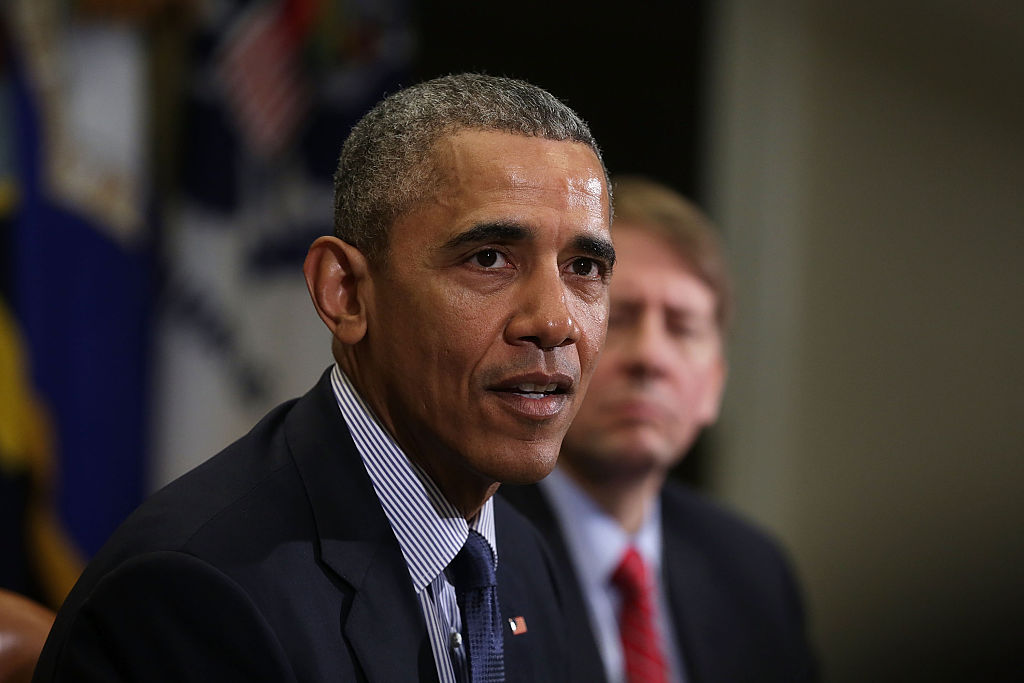
President Barack Obama speaks during a meeting with financial regulators at the White House on March 7, 2016 in Washington, DC. The president received an update on progress in implementing Wall Street reforms. (Alex Wong / Getty Images)
The Barack Obama administration initiated a host of new legislation designed to advance the interests of business. Often those initiatives contradicted Obama’s campaign rhetoric, which had promised that he would tax the wealthy at higher rates, pursue trade deals that benefited workers rather than corporations, and regulate business more closely. The disjunction stemmed less from the new president “selling out” than from the imperative of boosting business investment in the economy. Cultivating businesses’ confidence in the administration was essential because the $787 billion government stimulus bill passed in February 2009 was too small, given the magnitude of the crisis, and because the administration was unwilling or unable to take measures that would force investment in Main Street.
President Obama entered office in the throes of a historic disinvestment crisis. The problem was not a lack of money, but the fact that corporations were hoarding trillions of dollars in capital rather than investing it in the economy. Although the Great Recession officially ended in June 2009, the rate of unemployed or underemployed workers was still 17 percent in November 2010, and remained at almost 15 percent as Obama’s second term began in January 2013. Thus, Obama’s first term and much of his second were dedicated to convincing business leaders to start investing again.
During Obama’s first two years, many corporate leaders deemed his policies insufficiently pro-business. Their critique was overblown: from the start, the administration took great pains to accommodate corporate demands. But business was not satisfied.