Socialists Can Still Change the World for the Better
Because socialists were marginalized for decades, we’ve had to build a new left almost from scratch. It’s understandable to feel demoralized by defeats. But the movement we're building is one that can still win real change.
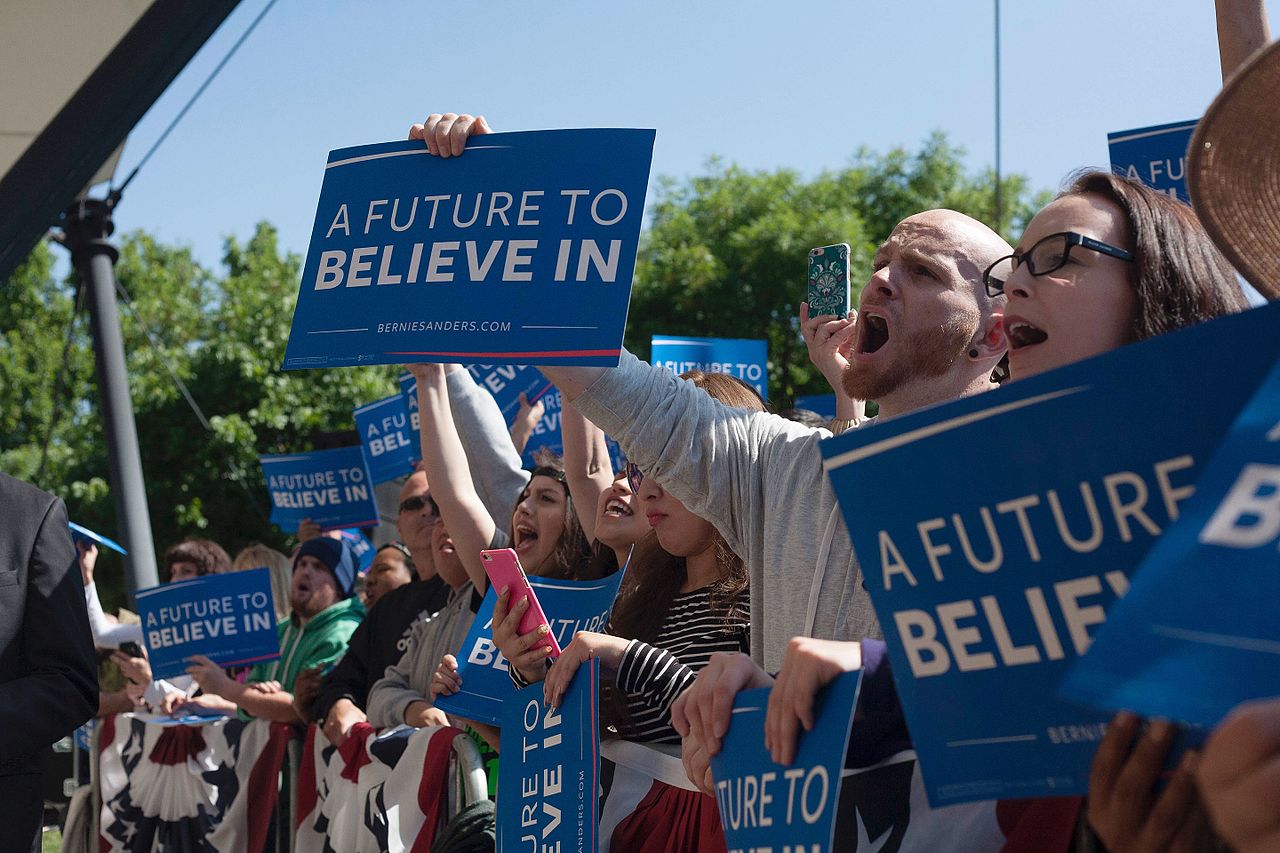
Attendees at a Bernie Sanders rally in Stockton, California, in May 2016. Richard Lopez / Wikimedia Commons
Americans are used to settling. Though other developed countries have guaranteed health care, guaranteed childcare, guaranteed sick leave, weeks and weeks of guaranteed paid vacation, much higher wages, more workplace democracy, free college and trade school, and well-funded mass transit (among other things), we are told by politicians that we simply cannot have these things, that policies like Medicare for All will “never, ever come to pass.”
During the mid-twentieth century, thanks to New Deal policies, high taxes on the wealthy that significantly reduced inequality, and strong union density, day-to-day life for at least some Americans was far more equitable than it is now. But since the 1970s, neoliberal capitalism has unraveled much of the modest social safety net we did have. Democratic politicians joined with Republicans to push policies that made the rich richer and the poor poorer. Labor union density plummeted to historic lows. American life increasingly became a gauntlet of stress and sorrow and humiliation for average people.
The American left was supposed to fight against these political trends. But in the ’80s, ’90s, and 2000s, several decades worth of defeat had made much of the Left often bitter, insular, and sectarian, significantly hurting its ability to effect political change. Lacking a real political alternative to the status quo, average Americans instead chose to hold their nose and vote Democrat, take a chance on Republicans, or drop out of political engagement entirely. The overwhelming majority of Americans resigned themselves to an understanding that they could not influence political decisions in their country. What else was there to do?