Last Week’s Pro Athletes Strikes Could Become Much Bigger Than Sports
Professional athletes have an enormous amount of power that they put to good use this past week in a series of unprecedented strikes. But workers of all types have similar kinds of power — and could, just like athletes, use it to shut society down to fight injustice.
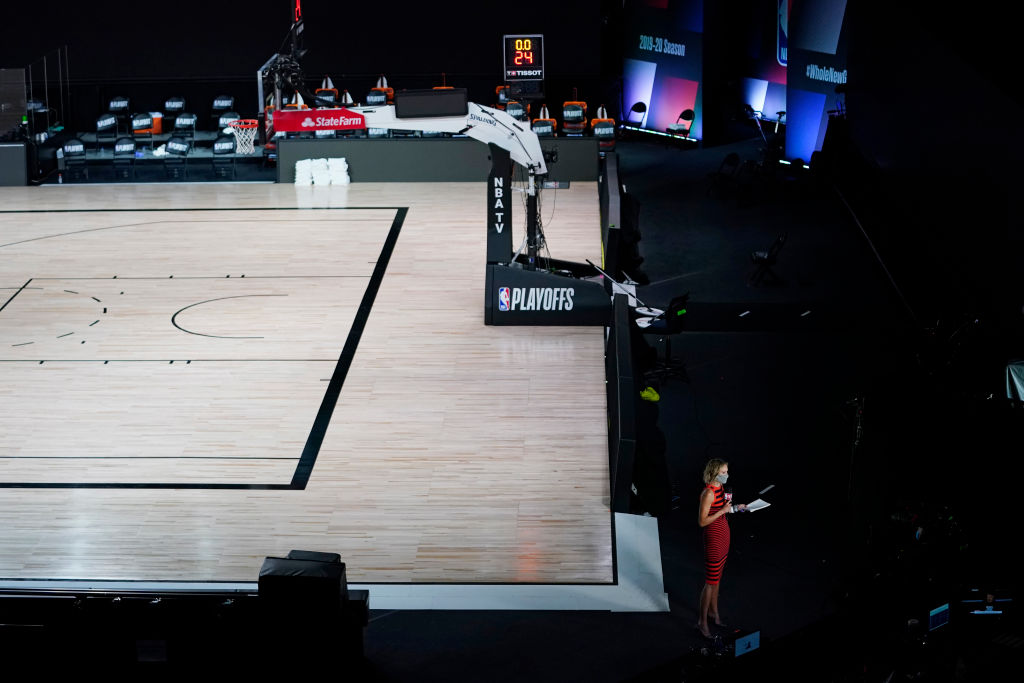
LAKE BUENA VISTA, FLORIDA: The court remains empty after a postponed NBA basketball first round playoff game between the Milwaukee Bucks and the Orlando Magic on August 26, after the Milwaukee Bucks went on strike ahead of their Game 5 playoff game against the Orlando Magic to protest the shooting of Jacob Blake by Kenosha, Wisconsin police. Ashley Landis-Pool / Getty Images
On August 26, professional athletes in five sports leagues (men’s and women’s basketball, soccer, baseball, and hockey) did something unprecedented: they shut down their workplaces over political issues, namely racial justice and police brutality. These actions have been widely misreported as a “boycott,” but it is important to recognize them for what they are: a strike.
While the scope of the strike and the political nature of the strikers’ demands are unprecedented in professional sports, their actions do follow some established patterns in the history of worker protest. Examining these patterns can offer clues about what these strikes among a small, high-profile group of workers might mean for workers more broadly.
Structural Power
Professional athletes are highly-skilled workers with what sociologist Howard Kimeldorf calls high “replacement costs.” Simply put, they’re not interchangeable parts that can be swapped in and out on a whim, at management’s discretion.