The “Subversive” Life of Concetto Marchesi, a Classicist and Italian Communist
The rector of Padua University, the classicist Concetto Marchesi stunned colleagues in December 1943 as he fled the city calling on students to join the partisan uprising against fascism. A lifelong Marxist, he embodied the revolutionary spirit of the Italian Communist Party — but also the compromises militants made during the long decades of dictatorship.
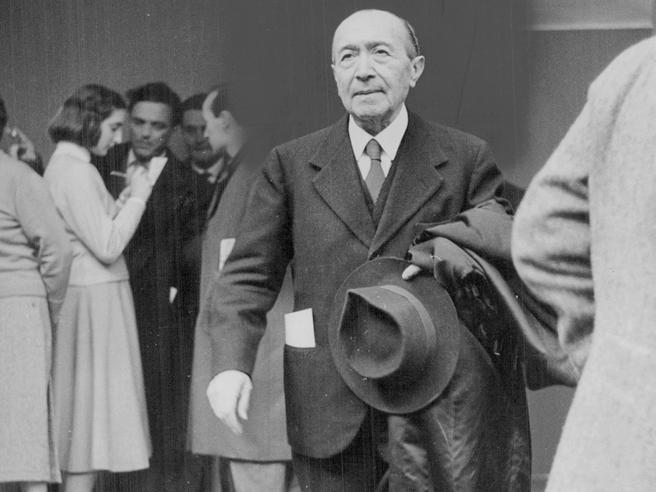
Concetto Marchesi.
The Italian communist and classical scholar Concetto Marchesi had a turbulent life — as was well-illustrated by the row which broke out after the events held to mark his death.
The commemorations in parliament on February 14, 1957 were staged by the Italian Communist Party (PCI) leader Palmiro Togliatti, and represented the first time that the senate and Chamber of Deputies both met to salute the memory of an eminent Italian. Togliatti presented the ex-partisan and senator in the most elevated terms, even resembling those used in his eulogy of Joseph Stalin four years earlier.
According to Togliatti, Marchesi had been a moral teacher: a Sicilian socialist who became a Communist upon the party’s foundation in 1921, and in December 1943 called on Padua’s students to rebel against Fascism after going on the run from his post as university rector.