Italy’s Past Glories
As Italy’s election approaches this weekend, the decline of its communist tradition still haunts the country’s left.
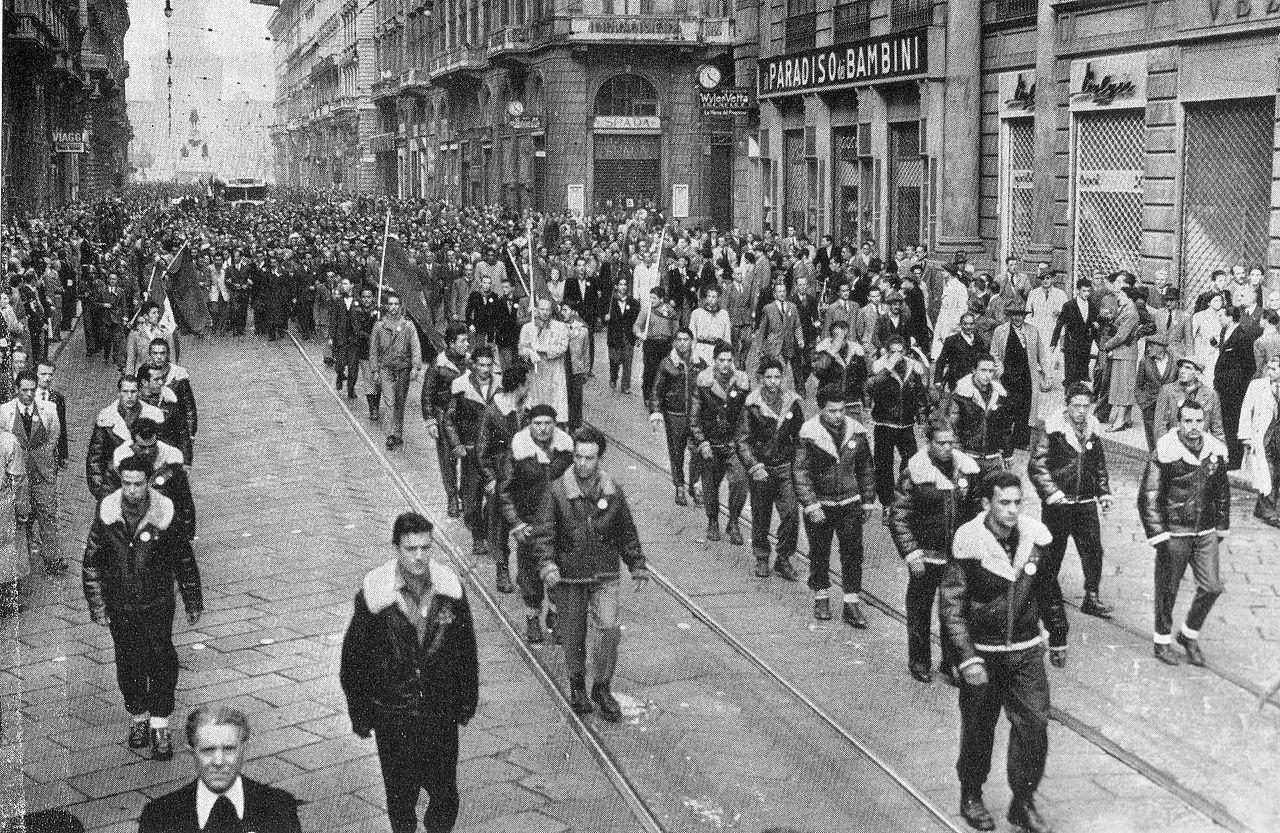
Members of the anti-fascist Volante Rossa open the PCI parade on April 25, 1948.Wikimedia
In the postwar decades, Italy’s PCI was Western Europe’s largest communist party. Its distinctive democratic brand of Marxism, the luster of its anti-fascist heritage, and the militancy of its labor movement all made the PCI something of a beacon for those in other Western countries seeking to build mass radical politics.
With the collapse of the USSR, in 1991 the party turned into the Democratic Party of the Left (PDS). Racing to assume a new liberal identity, it would in subsequent years abandon its former culture and its working-class base. Yet resisting this turn, around 100,000 of its militants joined with other radical-left currents to form Rifondazione Comunista, a new party which aimed to “refound” Italian communism.
Over the next decade Rifondazione was widely seen as a new hope for the European left. It repeatedly scored millions of votes in national elections and also had a close relationship with the social movements of the new millennium. Yet by the late 2000s it had crumbled, bringing down much of the remaining Italian left with it.