The First Woman to Lead a Political Party Was an Italian Communist
Born this day in 1889, Camilla Ravera led the Communist Party of Italy through its first difficult years under Fascist tyranny. Her story shows how a generation of women became political leaders — by tying their liberation to that of the working class as a whole.
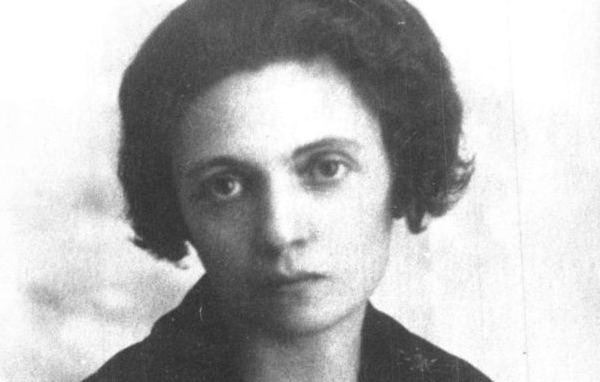
Camilla Ravera’s writings attracted the attentions of Antonio Gramsci, who proved decisive in directing her toward a leadership role in the newly born Communist Party.
Around noon on July 10, 1930 at Lake Maggiore, on Fascist Italy’s border with Switzerland. Two women get off a rowboat and are greeted by a man as they reach dry land. The three are expecting to meet other militants at a clandestine gathering which has taken months of planning. But the meeting never takes place; a spy has alerted Benito Mussolini’s police who arrest the three and haul them into the cells.
“My name is Camilla Ravera,” one of the two women tells the officer. After an eight-year hunt, the regime has finally arrested Ravera, general secretary of the Communist Party of Italy (Partito Comunista d’Italia, or PCd’I). For eight years, she had been operating under false names, starting when the Fascists banned her from teaching. In the intervening years, Camilla had been “Silvia” and then “Micheli,” becoming a ghost of herself — masking her identity so effectively that police were certain the famous “Micheli” must be a man.
With her austere face and slight frame, the forty-year-old Ravera was often called the maestrina (“little teacher”). Such a diminutive name didn’t suit her at all; behind her unthreatening appearance and frail voice was a steely character. This was a woman who took on the burden of keeping the Communist Party together when it was under constant attack from the Fascist police. A party that would have disappeared if not for the tenacity of its leadership group: Palmiro Togliatti, Umberto Terracini, Alfonso Leonetti, Felice Platone, and Camilla Ravera, who became segretaria — the top job in the PCd’I — in 1927.