Why the New National Security Laws in Hong Kong Matter
The new national security laws that Beijing has imposed on Hong Kong criminalize dissent — and they could make it harder for workers in mainland China to organize, too.
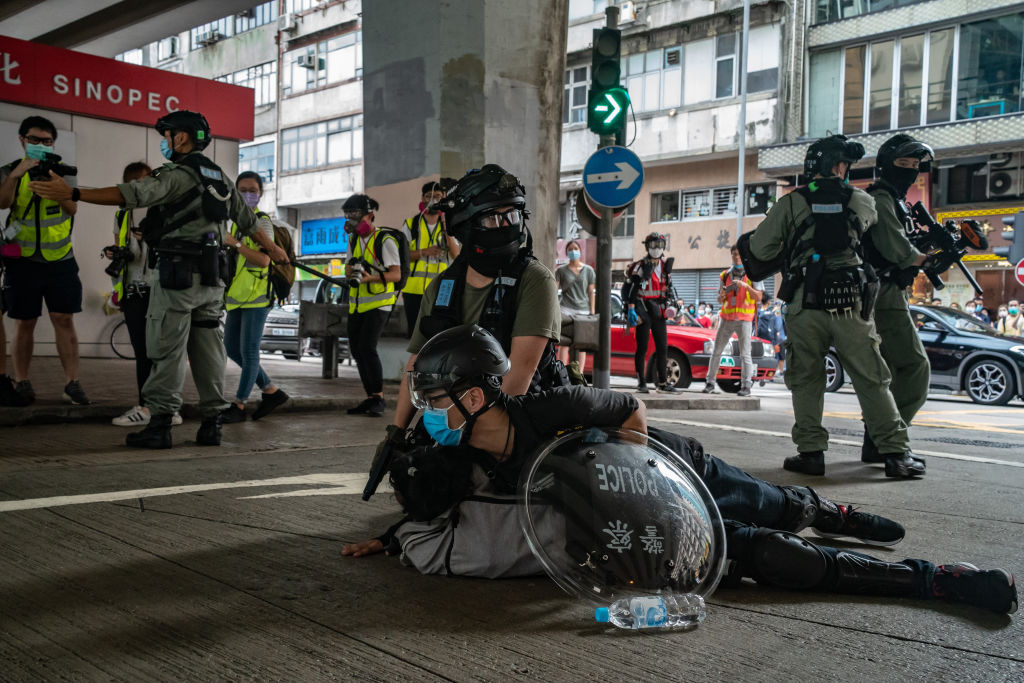
A man is arrested by riot police during a demonstration against the new national security laws on July 1 in Hong Kong. (Anthony Kwan / Getty Images)
Last Tuesday, national security laws that prohibit acts of secession, subversion, foreign interference, or terrorism in Hong Kong were passed unanimously by Beijing’s top officials. The laws have been marketed as a way to bring peace to Hong Kong and set the city back on track to reclaim its place as an economic powerhouse. But to anyone paying attention, it’s clear that the laws not only criminalize dissent of all kinds but also mark the premature end of Hong Kong’s high degree of autonomy and the “One Country, Two Systems” agreement.
By bypassing both the Hong Kong legislature and judiciary and possibly even introducing a Beijing-led enforcement agency to uphold the laws, President Xi Jinping has made it apparent he’s run out of patience with Hong Kong’s antiestablishment movement. Hong Kong lawmakers weren’t privy to a single detail before the laws were passed (though this did not stop pro-Beijing politicians from expressing their support for the law).
This wide-ranging attack on Hongkongers’ ability to dissent will only enable the Chinese Communist Party (CCP) to further breach Hong Kong’s Basic Law before 2047. Hong Kong protesters, who have fought for the democracy that was once promised to them, now face even graver risks when taking to the streets. Although dissenters who are caught will not be extradited to the mainland, they will be subjected to Beijing’s opaque legal system locally, facing sentences in tiers of three-, five-, and ten-year minimums. In the worst cases, they will get put away for life.