What China’s New National Security Laws Mean for the Protest Movement in Hong Kong
China’s new national security laws are a significant escalation against the protest movement in Hong Kong. Rather than act through Hong Kong officials to carry out its will, Beijing has decided to directly restrict the free speech rights of Hong Kong residents.
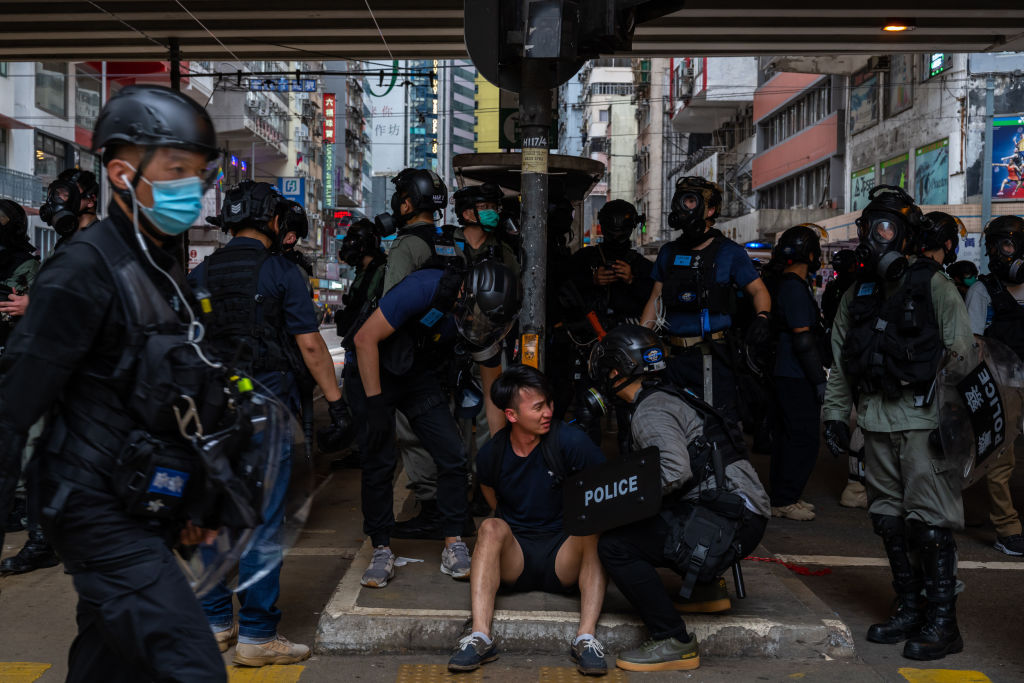
A protester is detained by riot police during an anti-government rally on May 24, 2020 in Hong Kong, China. (Billy H.C. Kwok / Getty Images)
Last week, the Chinese government announced it was planning to impose a new set of national security laws in Hong Kong. It set off a firestorm. Some critics have called the move a complete breach of the city’s autonomy. Others have said it signifies the end of Hong Kong’s “one country, two systems” framework, which has been in place since the United Kingdom handed the territory back to Beijing in 1997.
What follows are some answers to the big questions surrounding the laws, including Beijing’s motivations behind the bold move and what it means for the future of democracy in protest-engulfed Hong Kong.
What are the new national security laws? And why are they so controversial?
The new set of laws would criminalize acts such as secession, subversion, foreign interference, and terrorism. This would effectively ban a broad spectrum of political activity, including much of what we’ve seen from the Hong Kong movement over the last year. Any relationships with foreign political organizations could be categorized as foreign interference. Clashing with the police, even in self-defense, could be labeled terrorist activity. Sedition and subversion bans would diminish Hongkongers’ right to free speech and press freedom.