The Labour Party Has a Long History of Fighting Landlords
Landlord abolition was once central to Labour Party policy. But today, Labour’s radical housing past has slipped into the mists of time, as some party leaders soften Labour's stance on landlords.
Private rented housing now comprises around 20 percent of British households, having gradually recovered after collapsing to 9 percent of the market in 1991.
“Private landlordism is not an appropriate form of home-ownership in an advanced society,” wrote a prominent Labour MP in the early 1960s. This strident statement came not from the usual left-wing suspect Tony Benn, but rather the sage of the revisionist right, Tony Crosland, in his 1962 book The Conservative Enemy.
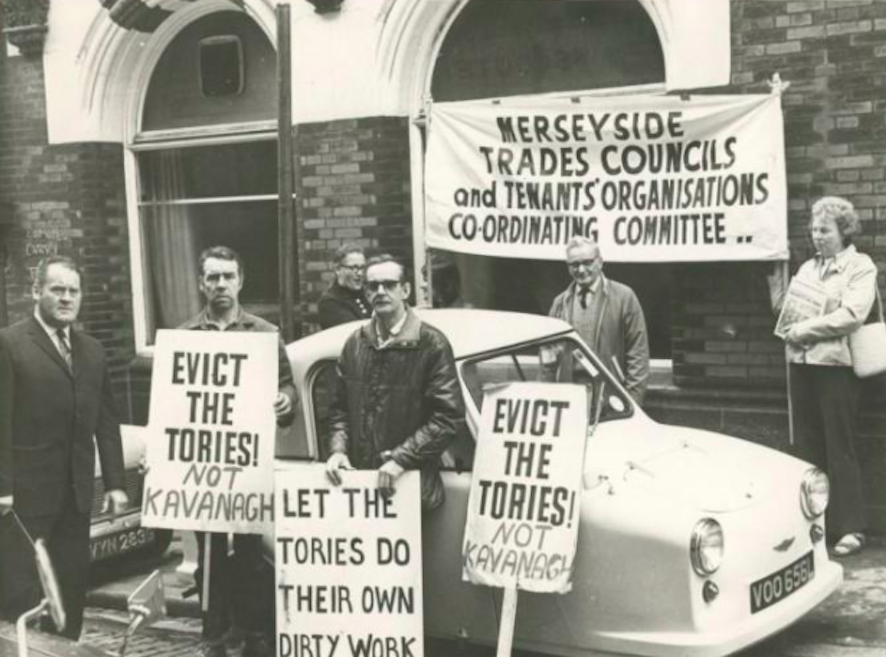
Crosland went on: “The landlord often looks on house-property simply as an investment to give [them] a perpetual return with the minimum of expenditure . . . worse still, [they] wield a degree of personal power over [their] tenants which can be offensive and intolerable.” Far from being extreme, his views were in fact Labour policy throughout much of the post-1945 period. The party sought to effectively abolish the private landlord through “municipalization” — local authority takeover — of rented housing.
In our pandemic present, this thinking has returned in “Cancel the Rent” campaigns supported by Labour activists, which seek to cancel rent arrears or even rent altogether for the duration of the crisis. It is curious, then, that the Labour Party shadow housing secretary Thangam Debbonaire described the philosophy of Cancel the Rent as “surprisingly un-Labour.”