How K-Pop’s Record Labels Exploit Its “Idols”
Donald Trump’s humiliating Tulsa rally showed how K-pop fandom has been able to mobilize fans in a common political cause. But if boy band BTS declared their solidarity with Black Lives Matter protests, the big labels have remained tight-lipped — and even less willing to address their own record of exploiting and abusing hopeful young “idols.”
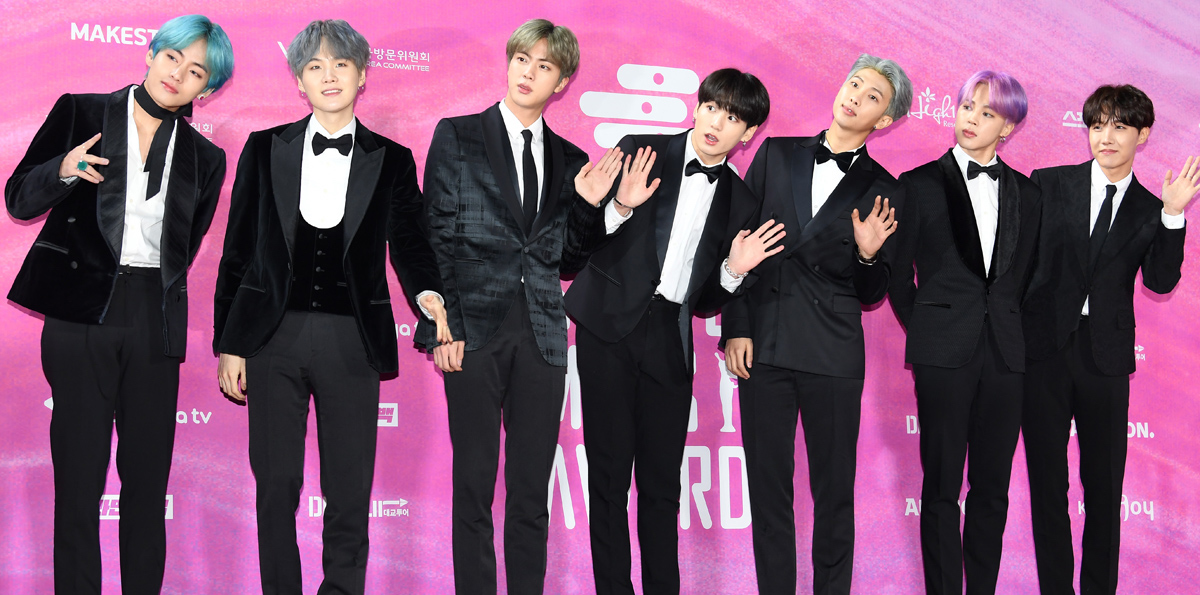
South Korean boy band BTS at the 2019 Seoul Music Awards on January 15, 2019. TV10 / YouTube
As Seoul reacts to the death of mayor Park Won-soon and Pyongyang’s hardening of its bellicose posture, American media attention is instead drawn to K-pop — or, rather, to its fans’ recent activism in the US political arena. After their successful sinking of Donald Trump’s Tulsa rally and their actions in solidarity with Black Lives Matter (BLM) protests, there has been avid discussion of K-pop fans’ ability to influence the presidential election. Amid the media buzz over K-pop fandom’s role in mobilizing Gen Z, one could easily mistake the political attitudes expressed by its fans for the reality of K-pop as an industry.
Now worth over $5 billion globally, K-pop’s success owes much to superb marketing and production values. Yet its brand is built on the obsessive micromanagement of idols’ public images and private lives — bound to an extreme culture of labor exploitation. Its cutthroat market is a reflection of the social contradictions resulting from more than twenty years of aggressive neoliberal economic reforms in South Korea. Testament to the country’s structural inequalities, K-pop has increasingly become a tool of South Korea’s soft power on the world stage. Ignoring the political dimension of K-pop allows its corporations to pinkwash their international reputation on the back of politically active fans.
K-Pop Fans, From BLM to Anti-Trumpism
While K-pop has been a growing presence in the US and global entertainment scene for more than a decade, it had yet to reach the consciousness of the average American when protests broke out after the murder of George Floyd. But three episodes brought K-pop and its fans to the attention of conservative and far-right forces.