The Music of Twenty-First-Century Uprisings
From Lebanon to Haiti to Chile, the world is in revolt. And the music that makes up the soundtracks to those revolts can point to a radically democratic, egalitarian, and joyful world.
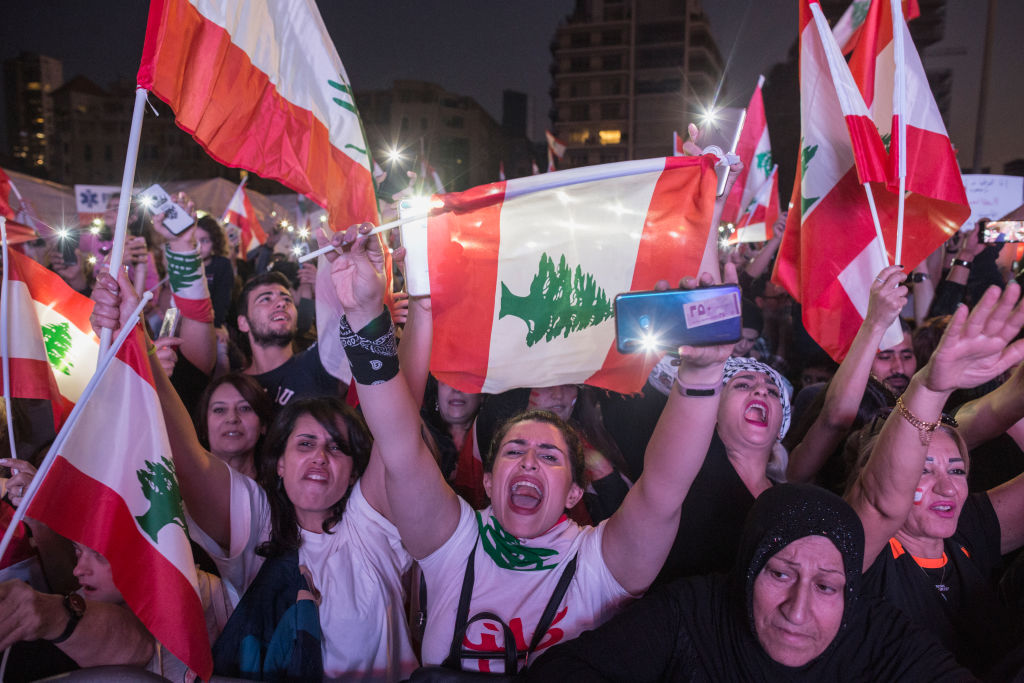
Anti-government demonstrators gather in Martyrs’ Square to listen to speeches and music on November 3, 2019 in Beirut, Lebanon. Sam Tarling / Getty Images
What is music for? It’s a difficult question. Embedded as it is in our daily lives, to ask what music does, what function it might serve to us as human beings, is a question we don’t usually wrestle with. Most days we brush away the question as easily as putting our earbuds in en route to work. We construct a miniature universe to keep the matters of the world and other people at bay. Mark Fisher described it in Capitalist Realism as “OedIpod consumer bliss, a walling up against the social.”
But then there are moments when the answer isn’t just challenged but blown wide open — when people move, notice our chains, and the simple mention of a place drums up images of revolt and uprising. Hong Kong, Lebanon, Catalonia, Chile, Haiti, Iraq — all of them flooded with millions refusing to accept the futurelessness of austerity, corruption, repression. The gray predictability of life under capitalism gives way to new modes of interaction with other people and our surroundings.
As Henri Lefebvre argued, cities have rhythms. The ebbs and flows of people through public and private spaces, the way they are designed and policed, who is allowed in them and when, all reflect patterns of exploitation. How sound and music are removed or employed in the neoliberal city’s efforts to control space matters, be it bans on busking or classical music piped in to chase away the unwanted. Space changes with sound.