How Black Pullman Porters Waged a Struggle for “Civil Rights Unionism”
Led by A. Philip Randolph, black Pullman porters struggled against the exploitation of the company and the racism of the mainstream labor movement to win a fighting union. They secured dignity on the job — and laid the foundation for the modern Civil Rights Movement.
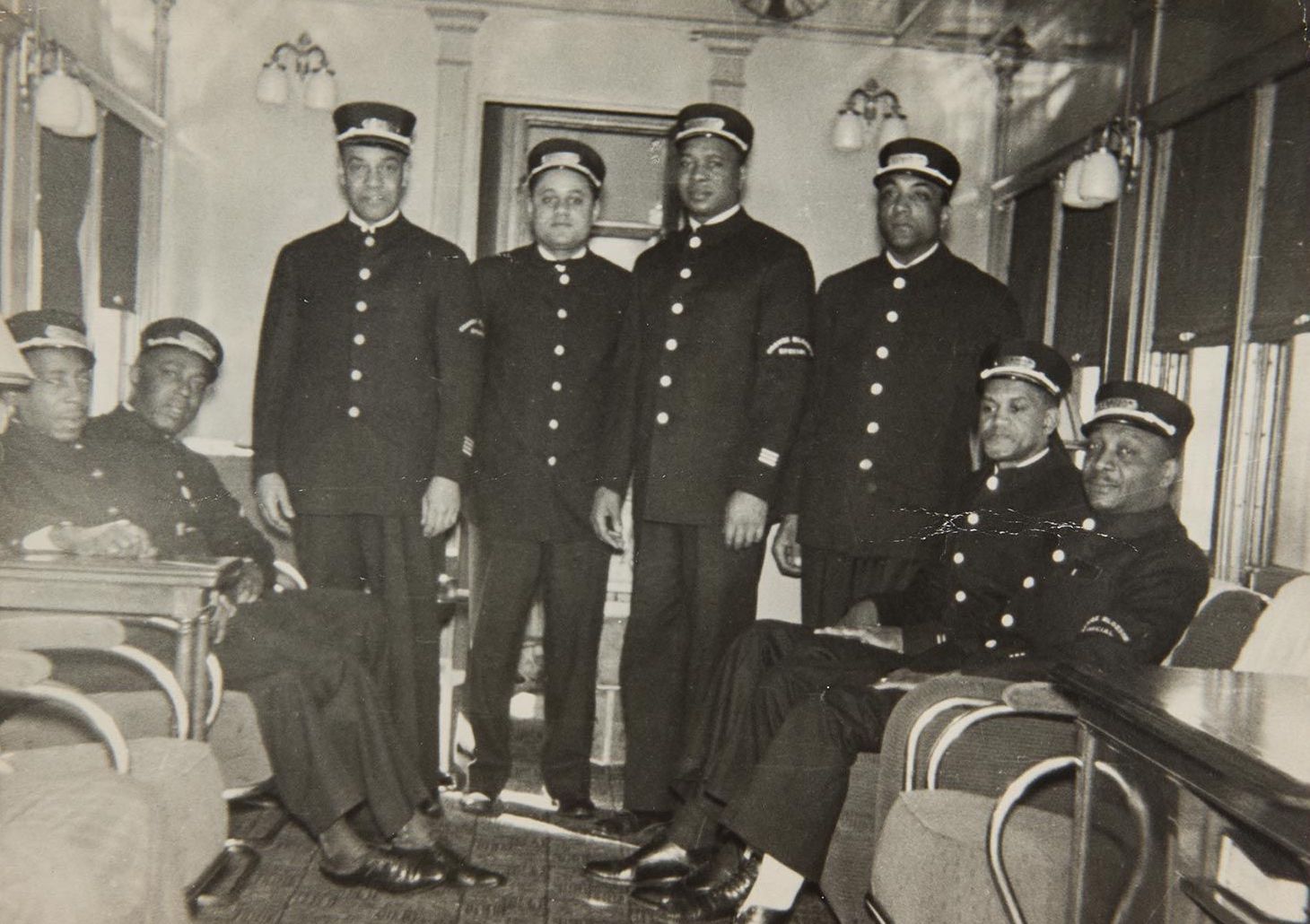
Members of the Brotherhood of Sleeping Car Porters.
When the Brotherhood of Sleeping Car Porters (BSCP) formed in 1925 to organize the largely black workforce of Pullman Company sleeping car attendants, the union faced challenges from every direction.
The staunchly anti-union Pullman Company had established a surveillance network to identify and fire union activists, and created a “company union” to fool the more impressionable workers. Moderate black leaders opposed the union drive, questioning whether sleeping car porters — who occupied one of the best jobs available to African Americans — should “bite the hand that feeds them.” Pullman workers couldn’t even rely on the solidarity of the mainstream labor movement, as many American Federation of Labor (AFL) unions barred black workers from membership.
Despite these hurdles, the BSCP and its president, A. Philip Randolph, managed to organize sleeping car attendants and, in the process, forge a “civil rights unionism” that fought for racial and economic justice.