When the Ruling Class Feared Communism
As we commemorate the many horrors of the Cold War, let’s not forget some of the good things it brought us — above all, a frightened ruling class scared into making concessions.
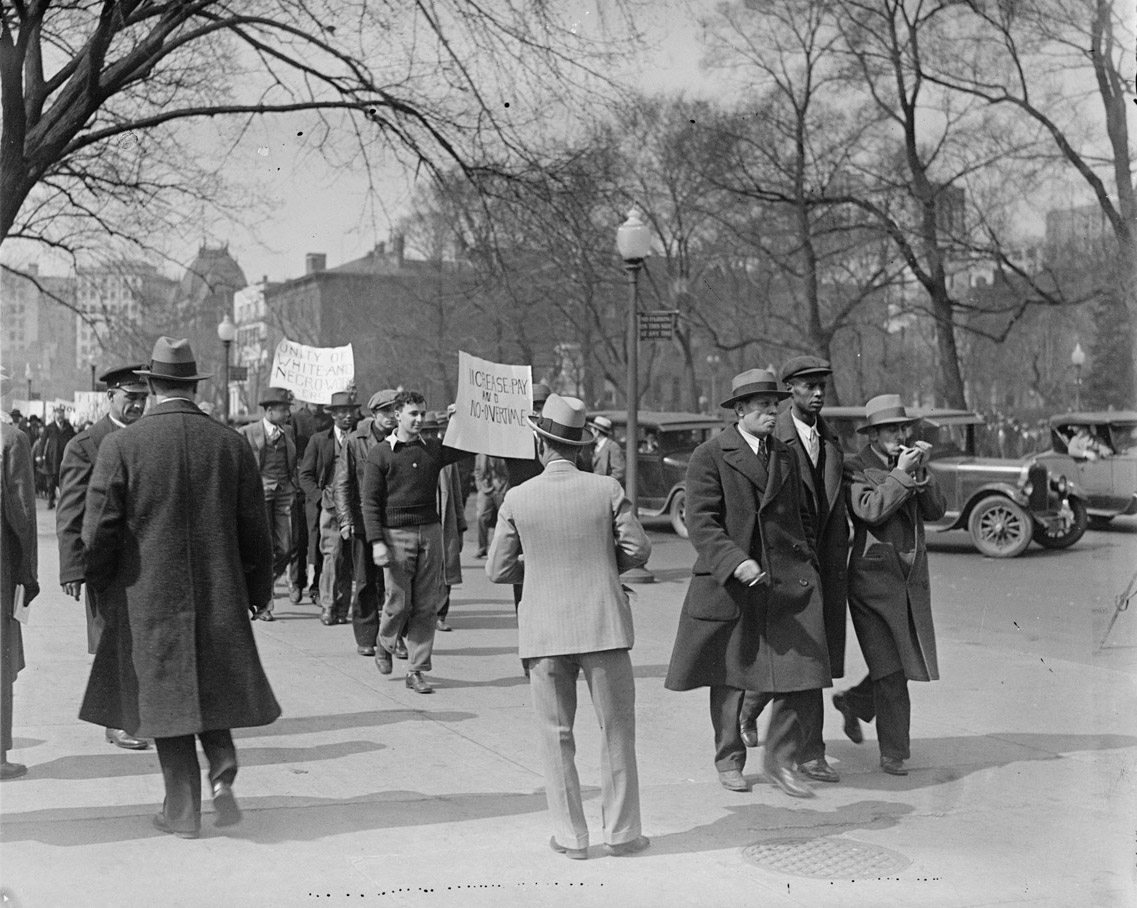
Over 100 black and white demonstrators linking arms were organized by the local Communist Party to picket the White House on March 6, 1930 as part of a nationwide protest against unemployment held in cities across the country. (Flickr)
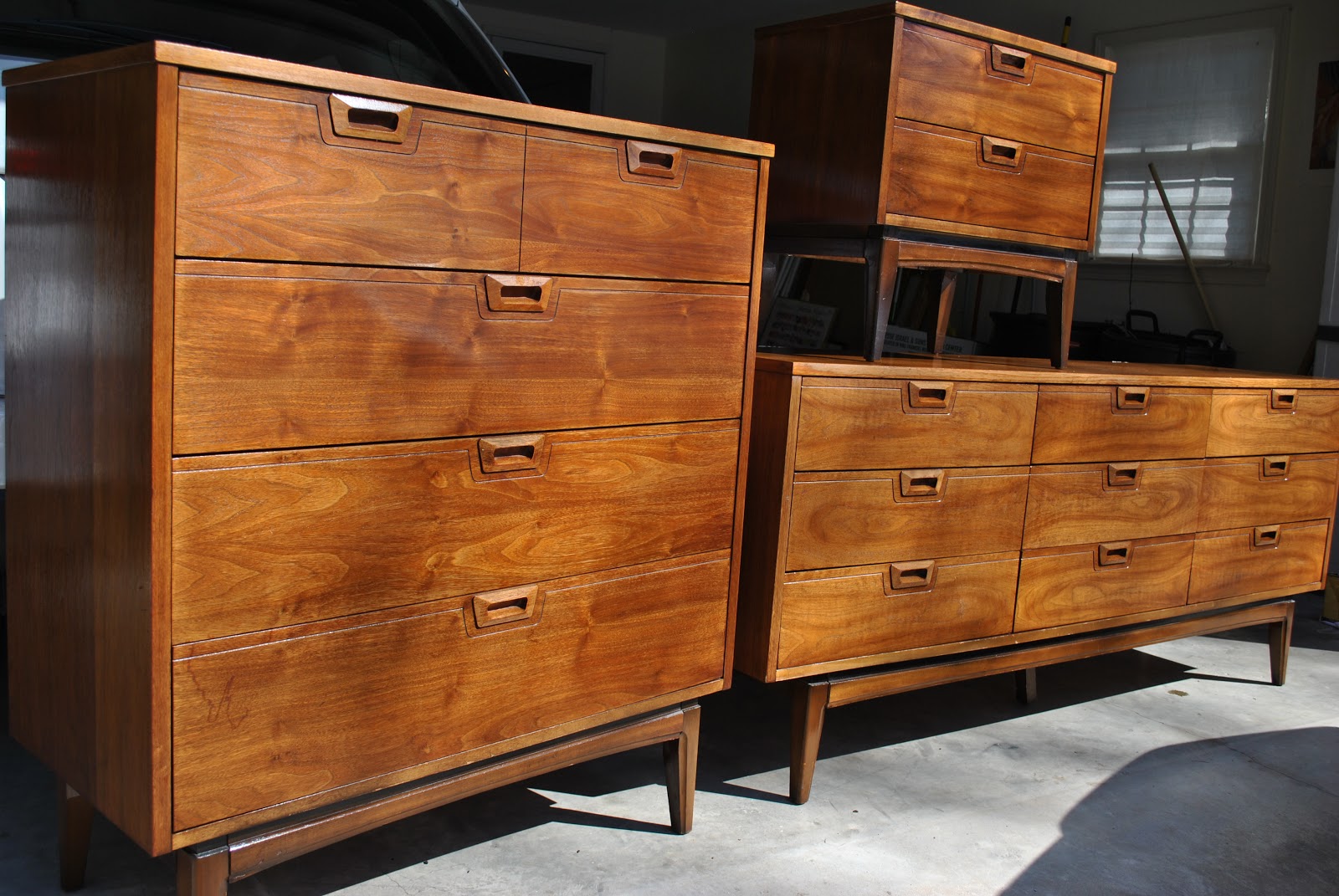
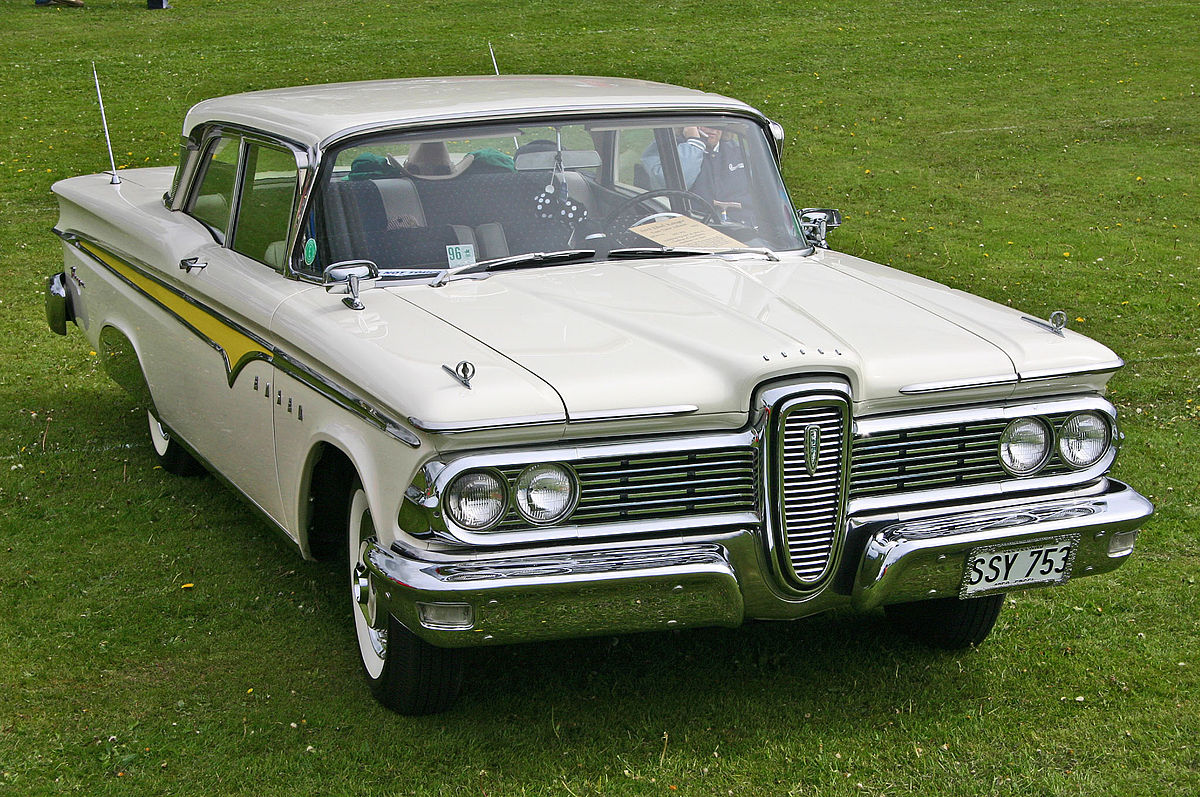
There are plenty of irrational reasons to be nostalgic for the middle of the twentieth century: who doesn’t love the furniture, the hairdos, the cars with vulva-shaped grilles? But there are plenty of practical reasons, too; it was a time of significant social change, thanks in part to the Cold War between the Soviet Union and the United States.
Obviously, the Cold War caused plenty of human misery. Repression marred political life while millions died in neocolonial proxy wars and gulags. And the stress of potential nuclear Armageddon wasn’t trivial. But the contest between two superpowers over which system delivered more comfort, freedom, and happiness to its citizens greatly improved the human condition worldwide. University of Pennsylvania ethnographer Kristen Ghodsee writes, “the general scholarly consensus is that ordinary people — whether in the capitalist, Communist, or developing worlds — benefitted from superpower competition. An unintended consequence of American and Soviet grandstanding was often real progress.”
Here are a few benefits that the working class in the West reaped from these tensions.