“The Aid from Europe Is Conditional on Fresh Austerity Measures”
- Nathan French
Faced with the mounting economic crisis, European leaders have promised aid to the hardest-hit member states. But there’s always strings attached. For France Insoumise MEP Manuel Bompard, the proposals for loans and grants ignore the real scale of the crisis — because they all put debt repayment above the needs of average Europeans.
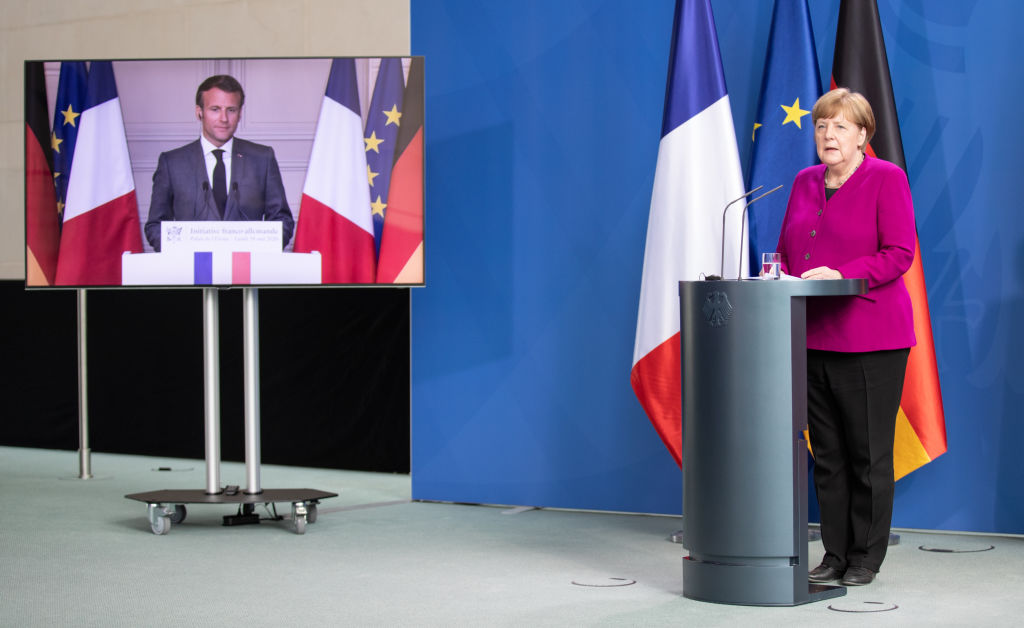
German chancellor Angela Merkel and French president Emmanuel Macron, seen present live via video, speak to the media at the Chancellery during the coronavirus crisis on May 18, 2020 in Berlin, Germany.Andreas Gora – Pool / Getty
At their press conference this Monday, German chancellor Angela Merkel and French president Emmanuel Macron again asserted their close partnership — announcing that they would together propose a €500 billion European fund to bail out economies hit hardest by the crisis. After months in which wealthier eurozone member states like the Netherlands (and Germany itself) had resisted “paying for Southern Europe’s debts” many media hailed the Berlin-Paris agreement as a breakthrough.
Yet a closer look at the proposal offers a less optimistic picture. Even apart from possible resistance by figures like Austrian premier Sebastian Kurz, the proposed grants and loans are dwarfed by the scale of the crisis — and the need to relieve the multi-trillion-euro debt already weighing down countries like Italy. Ominously, the Macron-Merkel proposal again invokes the post–2008 crisis language of aid given in exchange for privatizations and budget cuts, as it is to be “based on a clear commitment of member States to follow sound economic policies and an ambitious reform agenda.”
For Manuel Bompard — a Member of the European Parliament for France Insoumise — these proposals are “a return to austerity plans.” In a May 8 interview for l’Heure du Peuple (speaking before the Merkel-Macron press conference), he told Antoine Prat about the European Union’s responsibility in previous health care cuts, its lack of a coordinated fiscal response, and France Insoumise’s proposals to tie debt cancellation to a wider reordering of the economy.