We Rely on Cleaners’ Work, So Cleaners Should Be Paid More
Cleaning work is often called low-skilled, perhaps because it’s usually done by low-waged women. In an interview, a cleaner in the European Parliament and a hospital cleaner explain why their work should be more valued and better paid.
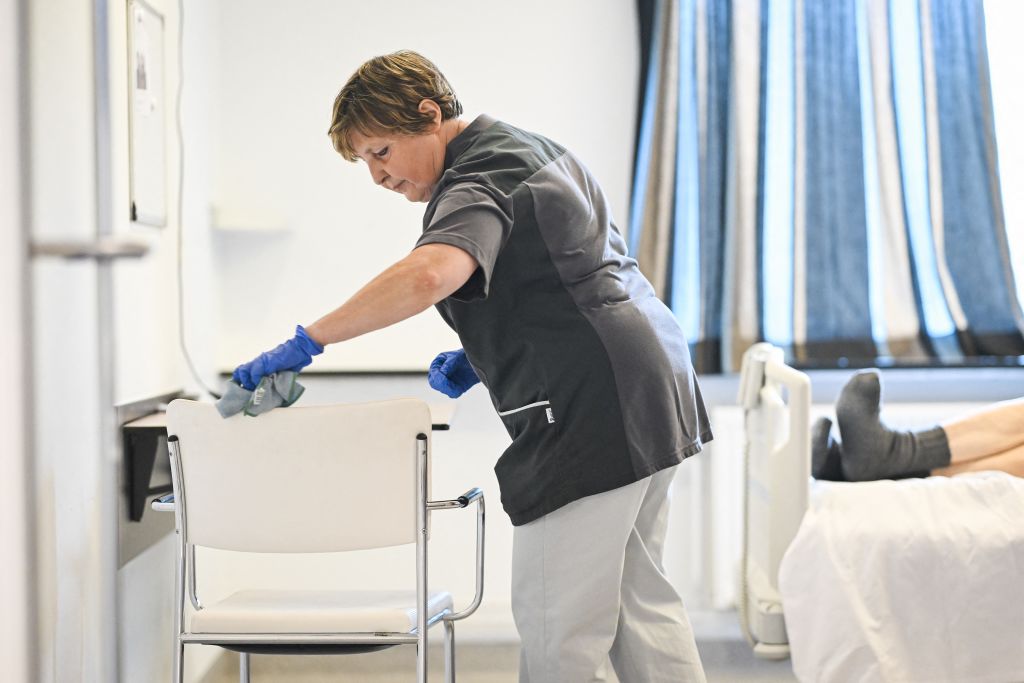
Since the late 1970s, hospital cleaners have seen their wages depressed by private firms’ cost-cutting measures. Now, European authorities are discussing new procurement rules that could end the race to the bottom on workers’ rights. (Dirk Waem / BELGA MAG / AFP via Getty Images)
Starting from the late 1970s, neoliberalism’s outsourcing revolution changed the lives of millions of low-wage service workers like cleaners. Once formerly employed by municipalities, national governments, or other public authorities to clean schools, hospitals, or airports, they now found themselves working for private companies contracted in competitive procurement markets.
These workers have experienced job insecurity, rising workloads, draining shift work, and increasing isolation in the workplace. As procurement markets were designed to drive down prices, employers in labor-intensive sectors such as cleaning pressured fewer workers to deliver more. It was often at the expense of their health and of service quality itself.
The European Union is a prime example of this development. Today public authorities across the EU spend over €2 trillion — 15 percent of GDP — every year on goods and services provided by private companies. The rules that govern the awarding of these public contracts have resulted in a race to the bottom for the lowest price. However, after a decade-long struggle by cleaners, security guards, food service workers, and their trade unions, a reform of EU rules is now underway, and it could genuinely improve the livelihoods of millions of workers.