Israel’s Bloated New Government Is Entering Dangerous Waters
Benjamin Netayahu’s newly convened government, the largest in Israeli history, is also facing the country’s greatest economic crisis in decades. As signs of public disaffection start to grow, it may try to avoid challenges to its power by provoking a violent confrontation with Palestinians.
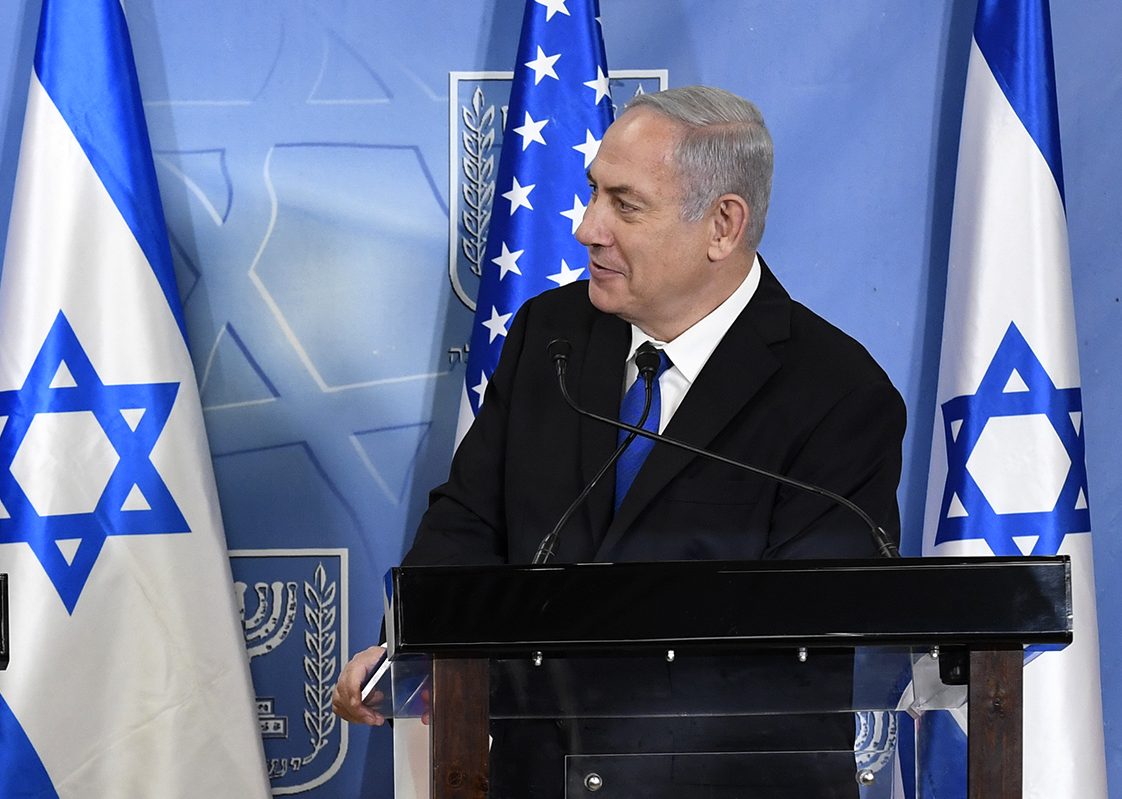
US Embassy in Tel Aviv / Wikimedia Commons
At first glance, Israel’s longest-serving Prime Minister, Benjamin Netanyahu, seems more secure in his post today than at any time in the past few years. His government’s response to the coronavirus crisis has been quite successful, relative to the Western states to which Israelis are used to comparing themselves. The centrist party Blue and White, whose rise created a stalemate leading to an unprecedented three elections within the last year, has split. Its head, former IDF chief of staff Benny Gantz, entered government in return for a promise that Netanyahu will hand over the premiership in eighteen months, pending the results of his ongoing corruption trial.
The newly convened “national unity” government includes not only two ultra-Orthodox parties and Gantz’s faction of Blue and White but the tiny rump of Israel’s once all-powerful Labor Party, giving the prime minister diplomatically useful “center-left” cover for his plans to annex large parts of the West Bank. Enjoying a comfortable majority of seventy-three out of 120 parliamentarians, the new government boasts a record thirty-four ministers, many with such made-up or flung-together portfolios as “community empowerment and advancement” and “higher education and water.”
But under the surface a great deal is changing in Israel — and not in ways that bode well for Netanyahu.