Morocco’s Burgeoning Resistance
In Northeast Morocco's mass protests for "a university, hospital, and work," a liberatory vision of Islam has played a key role.
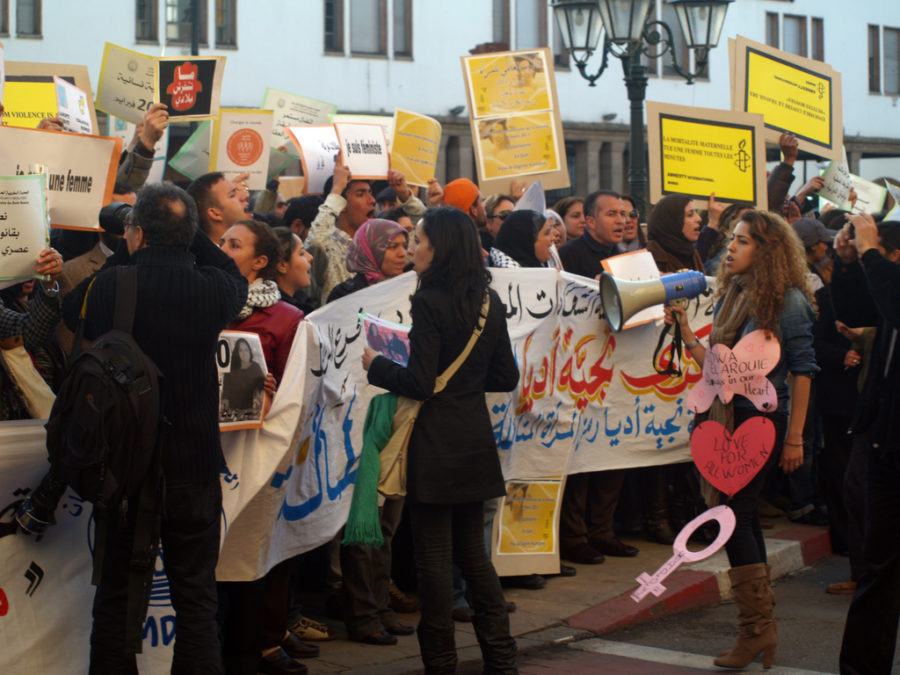
Demonstrators in Rabat on International Women’s Day, 2011. Nacho Fradejas Garcia / Flickr
“We want a university, a hospital, and work”: it’s remarkable how consistent the residents of al-Hoceima in Morocco’s northeastern Rif region have become in these demands since the Popular Movement (Al-Hirak al-Sh’abi) launched last October. In cybercafes and homes, in taxis and on the streets, everyone agrees: the Rif needs education, health care, and jobs.
While the movement’s growth and coherence has surprised some observers, the Moroccan state’s intense effort to suppress it has not. The regime — or as it is commonly called, the Makhzan, implying hidden, illegitimate power — has combined standard-issue repression with a shifting media campaign designed to slander the Popular Movement.
In late March, the state began arresting scores of activists, and now soldiers, police, and the secret service are acting almost like an occupying army in al-Hoceima and the surrounding towns. The past month has seen the greatest political unrest in the Rif since 2011; people now have to demand the release of political prisoners, too.