When the ACLU Betrayed Elizabeth Gurley Flynn and the Left
Eighty years ago today, the leadership of the ACLU voted to expel labor radical and founding member Elizabeth Gurley Flynn for her Communist Party membership. It was a stunning capitulation to red-baiting — and a reminder that liberal-radical alliances are often a tenuous thing.
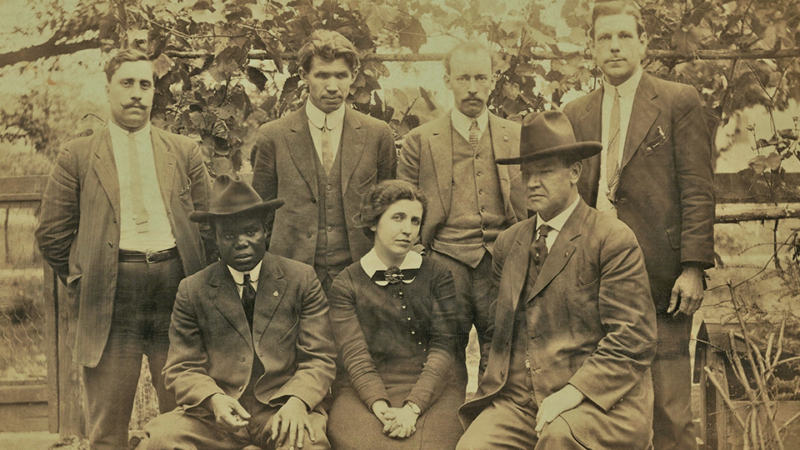
Hubert Harrison, seated left, and Industrial Workers of the World leaders Elizabeth Gurley Flynn and Bill Haywood, seated right, organized the 1913 Paterson Silk Strike. (American Labor Museum)
On May 7, 1940, the board of directors of the American Civil Liberties Union (ACLU) assembled at the City Club of New York on West 55 Street. The purpose of the meeting: to decide whether to expel charter member Elizabeth Gurley Flynn on grounds that her membership in the Communist Party (CPUSA) disqualified her from serving on the governing body of a civil liberties organization.
The idea that Flynn’s involvement in the CPUSA compromised her commitment to First Amendment freedoms was ludicrous. Her credentials as a civil liberties activist were unmatched by anyone on the board, rivaling even those of ACLU founder and executive director Roger Baldwin. Since 1909, when she led the first of three free speech fights as an organizer for the Industrial Workers of the World, Flynn had been a dedicated advocate for free expression, freedom of the press and assembly, and the right to a fair trial for all labor activists, regardless of political affiliation. In 1937, while she was a member of the ACLU Board of Directors, she joined the Communist Party. With full knowledge of her CPUSA membership, the board unanimously reelected Flynn to a three-year term in 1939.
But early in the morning of May 8, after a lengthy debate, the board voted to expel the longtime radical.