Free Speech Is a Left-Wing Value
Early American socialists like Eugene Debs fought for free speech rights as a bulwark against state tyranny and employer despotism. We should take up their radical struggle for civil liberties today.
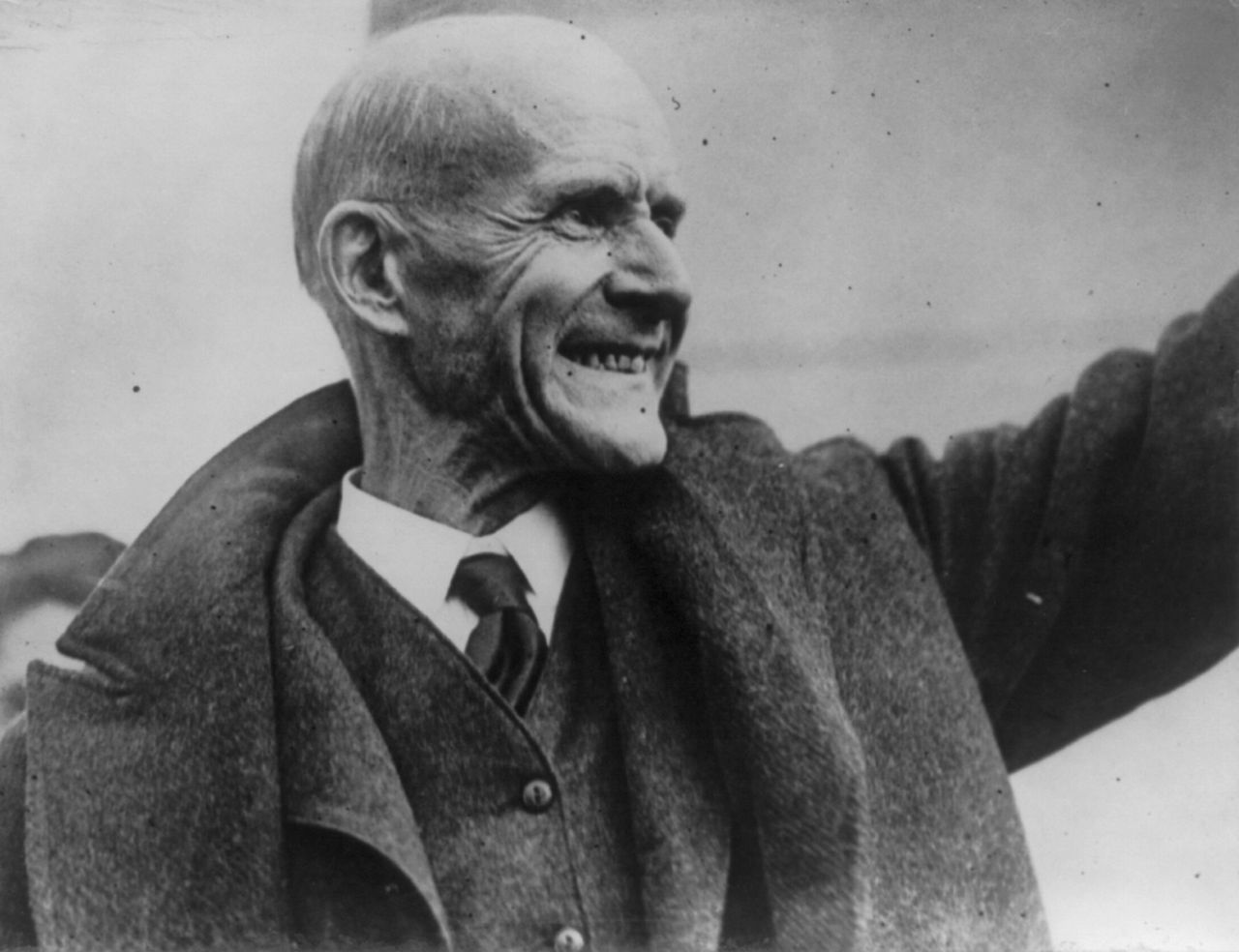
Eugene V. Debs leaving the Federal Penitentiary in Atlanta, Georgia, on Christmas Day 1921 after being imprisoned in 1918 under the Sedition Act.Library of Congress
On June 16, 1918, Eugene Debs stood up before an audience in Canton, Ohio. Debs, the famed tribune of socialism, had largely been absent from the speaking circuit for the previous year due to poor health. During his convalescence, many of Debs’s comrades in the Socialist Party had been jailed for their opposition to World War I. Speculation abounded about how he might navigate the new repressive atmosphere.
When Debs took the podium in Canton, he denounced the “Junkers of Wall Street,” praised the Bolshevik Revolution, extolled the strength of the Socialist movement, and expressed his devotion to “the cause of labor.” It was his remarks on World War I, however, that drew the most attention. The perennial Socialist Party presidential candidate told the picnicking audience that “[t]he master class has always declared the wars; the subject class has always fought the battles.” Faced with yet another ruling-class war, Debs countered, “If war is right let it be declared by the people. You who have your lives to lose, you certainly above all others have the right to decide the momentous issue of war or peace.”
Clyde Miller, a journalist with the Cleveland Plain Dealer, tipped off federal authorities about the content of Debs’s speech, and the socialist leader was charged under the Espionage Act, a statute used to criminalize opposition to the war and silence radical voices. Arguing that Debs’s antiwar speech was intended to incite insubordination within the military and obstruct the draft, the government tried, convicted, and sentenced Debs to ten years in prison.