The Radical Roots of Free Speech
Conservatives like to claim that leftists are opponents of free speech. But that’s nonsense: it was radical labor organizers who founded the ACLU and who fought for civil liberties as a means to resist capitalists’ power.
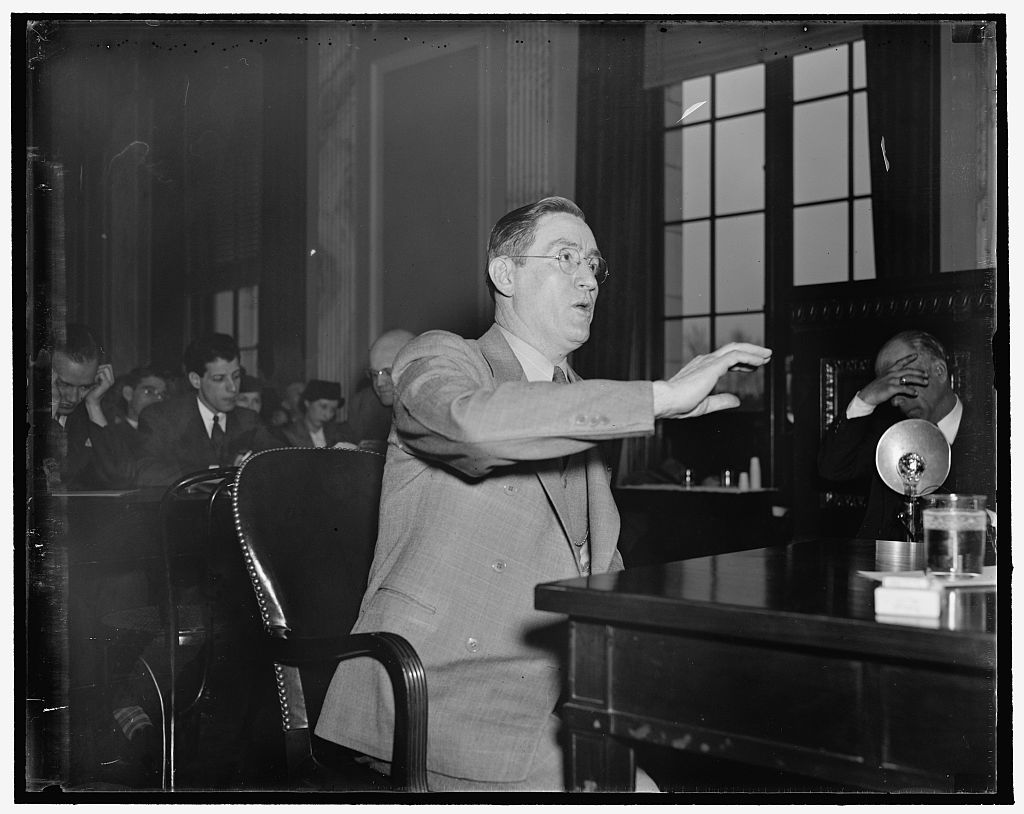
John H. Dalrymple, president of the United Rubber Workers of America, testifies before the La Follette Civil Liberties Committee on March 18, 1937, in Washington, DC, about being beaten up for union activities. Harris & Ewing / Library of Congress
Freedom of speech has been a battleground between the Left and the Right for at least a century. Yet, in recent years, this conflict has taken a peculiar twist, with leftists frequently presented as opponents of civil liberties and conservatives as defenders of freedom of expression.
Whether or not this is accurate (hint: it’s not), the depiction is a reversal from previous decades, when the Right launched censorship campaigns to further conservative causes and leftists cast themselves as unapologetic partisans of free speech. It also gets the origins of the modern civil liberties movement backward.
As legal historian Laura Weinrib writes in The Taming of Free Speech: America’s Civil Liberties Compromise, it was labor organizers who formed the earliest pro–free speech groups in the United States. Weinrib focuses in particular on the rise of the American Civil Liberties Union (ACLU), whose radical founders viewed “the right of agitation” — the right to strike, to picket, and to boycott — as both constitutionally protected and essential to workers’ ability to resist the power of their employers.