A Basic Income Is a Lifeline in This Crisis — But Can’t Solve Everything
With millions of people put out of work, analysts across the political spectrum have proclaimed that the time has come for an Unconditional Basic Income. But this safety net won’t be enough unless we take on the biggest problem we face — an economic model based on high rents and high personal debts.
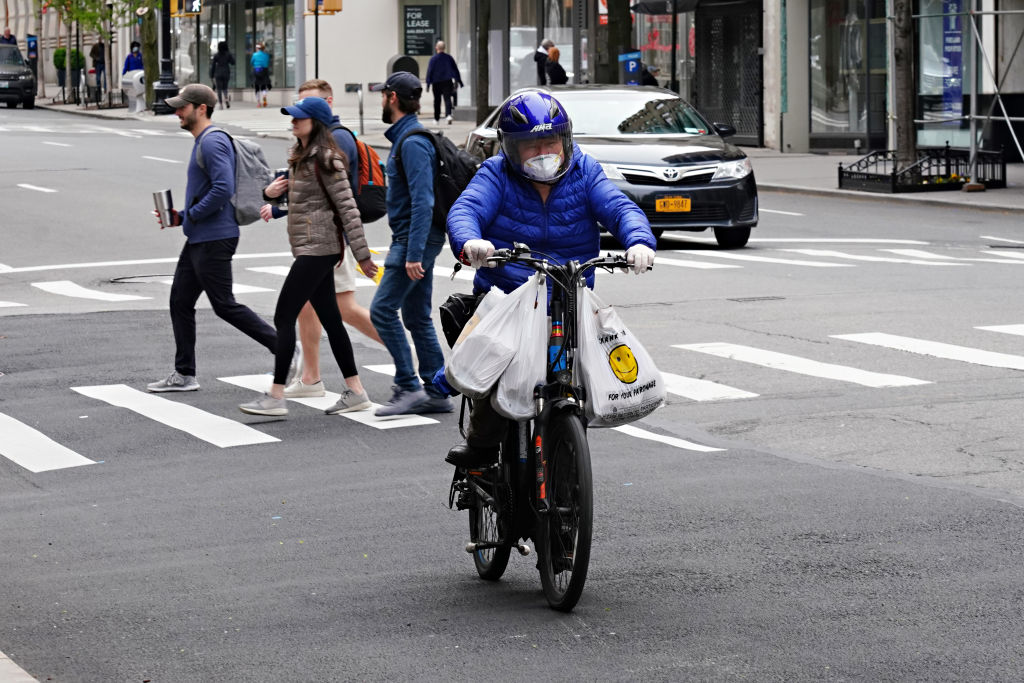
A restaurant delivery person wears a protective mask while riding a bicycle during the coronavirus pandemic on April 19, 2020 in New York City.Cindy Ord / Getty
As the COVID-19 pandemic engulfed Europe and North America, previously unshakable foundations of neoliberal policy seemed to melt into thin air. Increased government intervention in health care provision appears to contravene decades of privatization and market “efficiency.” Debt-funded stimulus packages and bailout funds of unprecedented proportions indicate a pivot to expansionary economic policy. State-imposed lockdowns have shifted attention to the social value of goods and services and are fueling a widening conversation about the purpose of work and the economy. No wonder that on the Left, these measures reignited hope about the emancipatory potential of the crisis — and, to some, suggested nothing less than the end of neoliberalism.
Nowhere was this hope more visible than among supporters of Unconditional Basic Income (UBI). After decades of advocacy and “mainstreaming,” it looked like the call for a guaranteed income for all was finally having its moment. Even the Financial Times acknowledged that cash handouts made sense during a pandemic that forces people to stay home from work. Well-worn but powerful objections about laziness and incentives to work suddenly became redundant, while the emergency context freed up fiscal resources that are kept under a tight lock under normal circumstances.
But as the contours of official relief measures became clearer, some of the more high-strung hopes for UBI have been tempered. Media have been quick to use this label for all and any cash transfers to stabilize incomes — for instance, several Anglophone outlets proclaimed that Spain had introduced UBI, when in fact the government has proposed a poverty relief measure benefiting only around 5 million people. Nowhere have current government responses taken the form of an unconditional basic income. Instead, existing measures are fragmented, ad-hoc, and time-limited. They are insufficient answers to the imminent need for income support during the lockdown — with little to offer to those who are already most vulnerable and exposed as unemployment and precarious employment relations dramatically increase in the coming recession.