Mitt Romney’s $1,000 Isn’t Our Universal Basic Income
The “UBI” ideas being thrown around as a response to the coronavirus are, in many cases, neither universal, basic, nor an income. But they do show how much the Left has shifted what’s considered possible over the past decade.
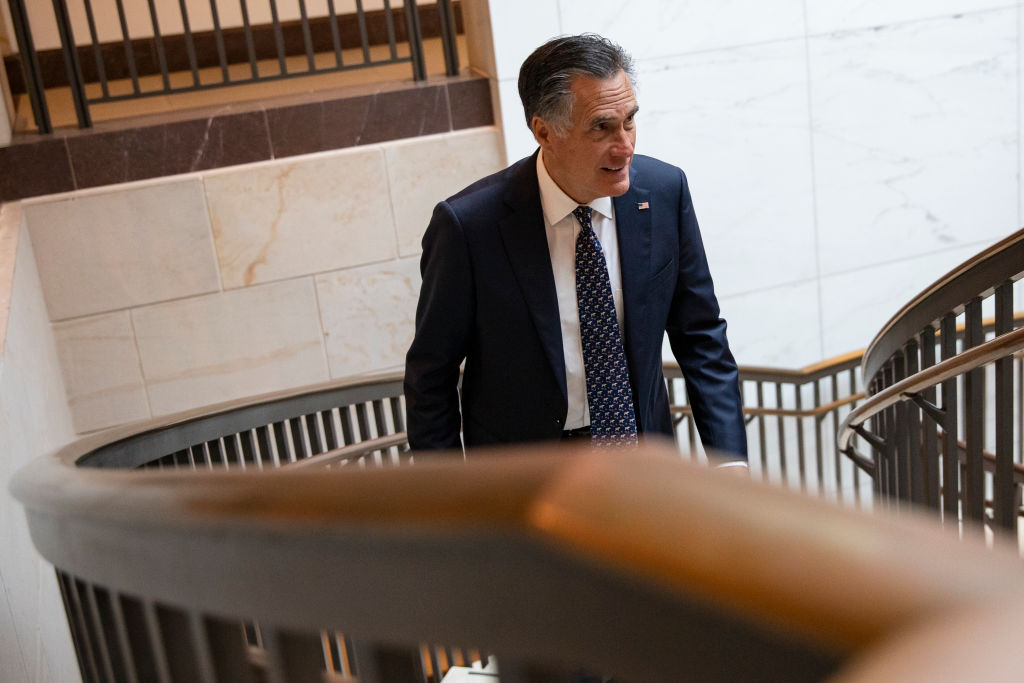
Sen. Mitt Romney on Capitol Hill on March 10, 2020 in Washington, DC.Samuel Corum / Getty
On March 12, Alexandria Ocasio-Cortez included the Universal Basic Income (UBI) as part of a list of urgently needed measures, and she isn’t the only national figure — right-wing or left — who has floated that term. But what is UBI, beyond some vague idea of “the government should just mail checks to people”?
It continues to be a strange trip for the Universal Basic Income: from the hobbyhorse of fringe academics and activists, to the quirky policy proposal of presidential candidate Andrew Yang, to, now, a recurring item on the list of demands to address an epidemiological and economic crisis that has engulfed the world.
This partly reflects the ongoing semantic dilution of the term “universal basic income,” which has come to be a shorthand for policies quite different from those intended by its early advocates. But that’s no reason not to hold on to demands for unconditional cash payment as part of the response to the COVID-19 crisis. Such appeals uphold principles of universalism and solidarity, in contrast to neoliberal and fascist responses to the crisis. And they can play a crucial role in maintaining the conditions of material survival, within which we must rapidly develop alternatives to a zombie neoliberal order that appears, finally, to be crashing down for good.