In the 2010s, the People Began Saying No to Endless War
The decade began with Bush-era jingoism intact. Then, the unthinkable happened: radical critiques of America’s endless wars and reflexive militarism that were once hopelessly marginal went mainstream.
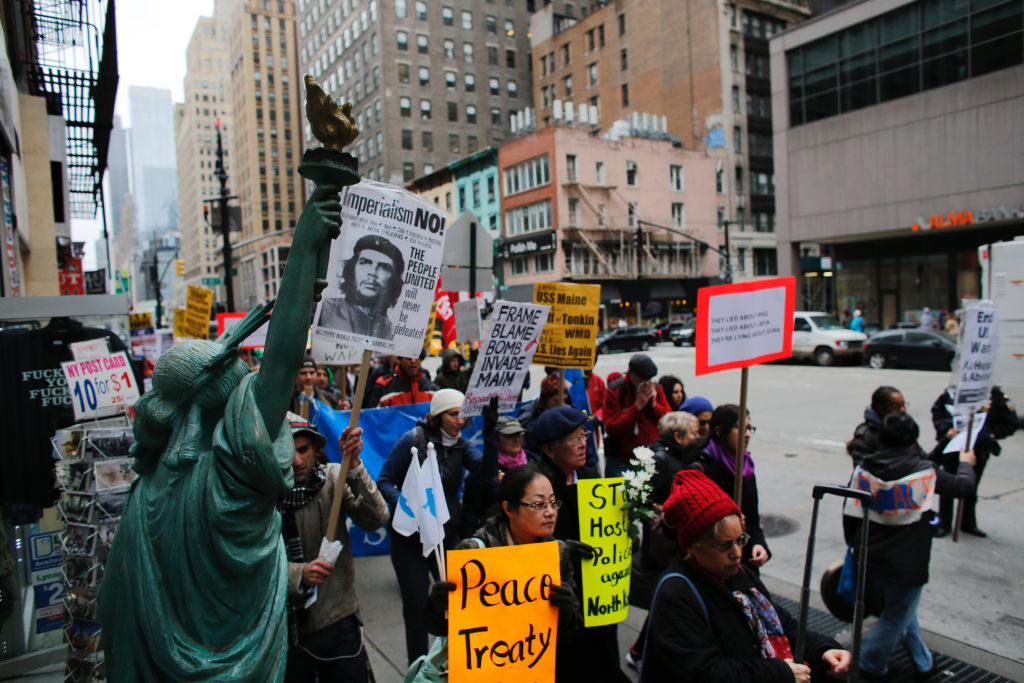
Demonstrators carry signs during an anti-war protest after President Donald Trump launched airstrikes in Syria, April 15, 2018 in New York City. Kena Betancur / Getty
Only two decades in, the twenty-first century has so far been one of profound crisis. But one thing has stayed remarkably, resiliently consistent: the “war on terror.”
The century kicked off with the horrific September 11 attacks that prompted that so-called war, with Afghanistan its first stop. Invading to kill or capture Osama bin Laden and Al Qaeda, who were responsible for the attacks, the Bush administration instead allowed them to escape so they could depose the ruling Taliban, who hadn’t.
Ten years later, with the “war on terror” now bigger and bipartisan, the decade now ending kicked off with US military finally claiming Bin Laden’s scalp in an illegal nighttime incursion into another sovereign country. Greeted on American streets like a second Victory over Japan Day, the assassination was a strategically pointless act aimed more at securing Barack Obama’s reelection than bringing the “war” to an end.