Ballet Against Austerity
Ballet and classical music shouldn’t belong to the elite. The Paris Opera’s free, outdoor performances for striking French workers point to a radical redefinition of what work, play, and the arts could be under socialism.
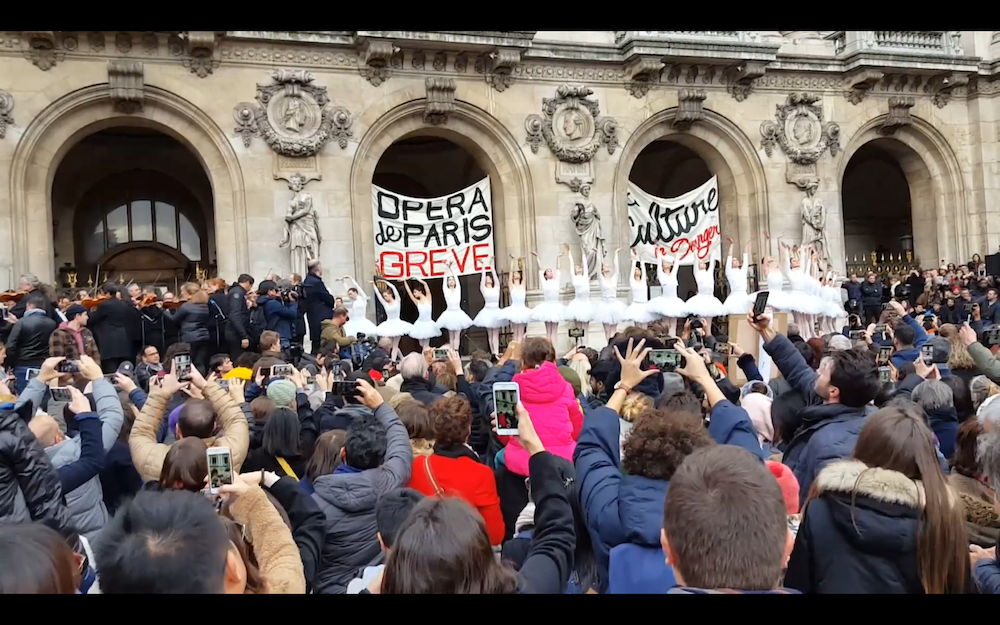
Striking ballet dancers from the Paris Opera perform “Swan Lake” for the public in front of the Palais Garnier in Paris on December 24, 2019.
Behold, the anarchic magic of a mass strike: when physical resistance seizes the collective imagination, and the balance between destruction and creativity begins to shift. Cities split open, and new futures spill out. Striking workers cut Amazon’s power, but restore it for poor residents. Yachts of the rich burn in the harbor. And for a brief moment, even the Eiffel Tower, one of the world’s most iconic structures, is shut down.
So it is in France. President Emanuel Macron, making good on his flagship campaign promise, is telling the nation’s workers that he plans to replace the country’s pension plan — one that has achieved one of the lowest old-age poverty rates in the world — with a meritocratic “points-based system.” Workers have replied in much the same way as the gilets jaunes did a year ago, with a firm and collective “va te faire foutre.”
It is already the longest wave of rolling strikes since May 1968. And it has made the government nervous. The original plan to bring the more moderate unions, such as the CFDT (French Democratic Confederation of Labour), to the table for a negotiated settlement they could abide by didn’t work. With more mass demonstrations this past weekend, the government withdrew a major pillar of the plan: the raising of the retirement age from sixty-two to sixty-four. Though apparently enough for the CFDT, more left-wing federations, such as the CGT (General Confederation of Labour), have vowed to stay on the streets.