Italian Football, a Mirror of a Society in Crisis
In the 1980s and 1990s, Italy’s Serie A was the world’s leading football league. But as financial interests asset-strip once-great clubs and the terraces become home to harshening racist abuse, Italian football no longer looks like such a “beautiful game.”
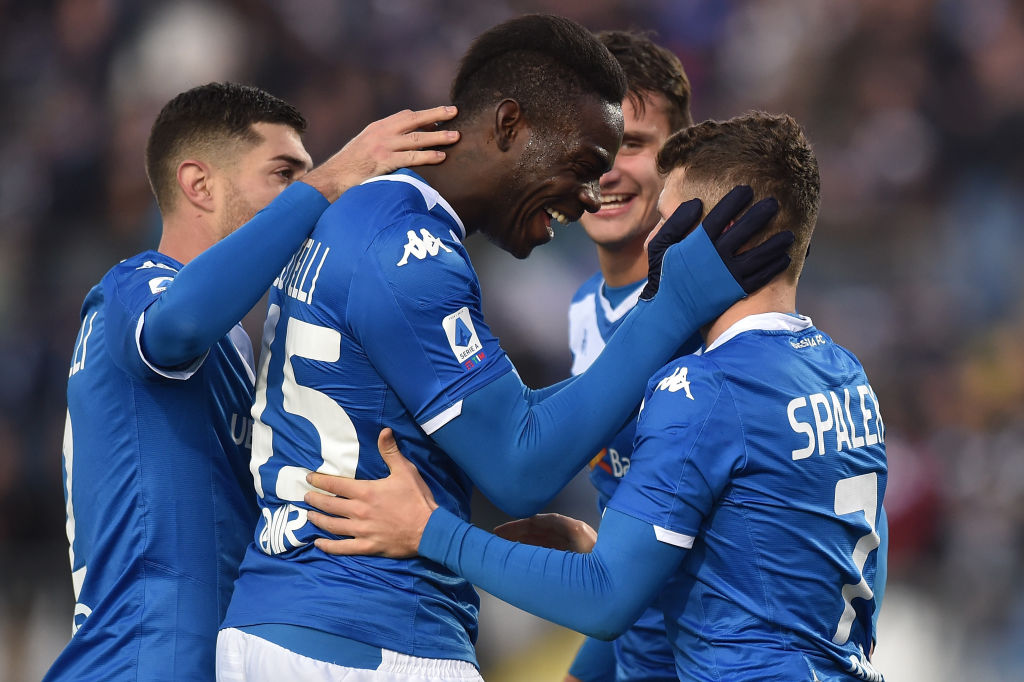
Nikolas Spalek (R) of Brescia celebrates with Mario Balotelli after scoring his team’s third goal during the Serie A match between Brescia Calcio and US Lecce at Stadio Mario Rigamonti on December 14, 2019 in Brescia, Italy. Tullio M. Puglia / Getty
The year 2019 marked the ninetieth anniversary of Italy’s leading football championship, Serie A. Both a blessing and a curse for millions of fans around Italy and the world, this league is the sacrament of a “sort of fanatical civic religion.” Italians long dedicated their Sundays to Serie A above all else, before matches started spreading to weekdays at the TV schedulers’ behest.
But Italian football hasn’t always been what it is now. A particular change came with the Viareggio Charter of 1926, a foundational text that heralded both professionalization and the creation of Serie A. This document was driven by two forces that would almost immediately come to shape football in Italy — industry and politics.
This was first visible in the opening up of the transfer market for players. The late-1920s turn from amateur to professional football (on the news agenda again today, thanks to the development of the women’s game) allowed the owners of the big Northern clubs to strengthen their lineups without simply paying players under the table.