Why the US Loses Wars
The United States has the most powerful military in the world. Yet it just keeps losing wars. Why?
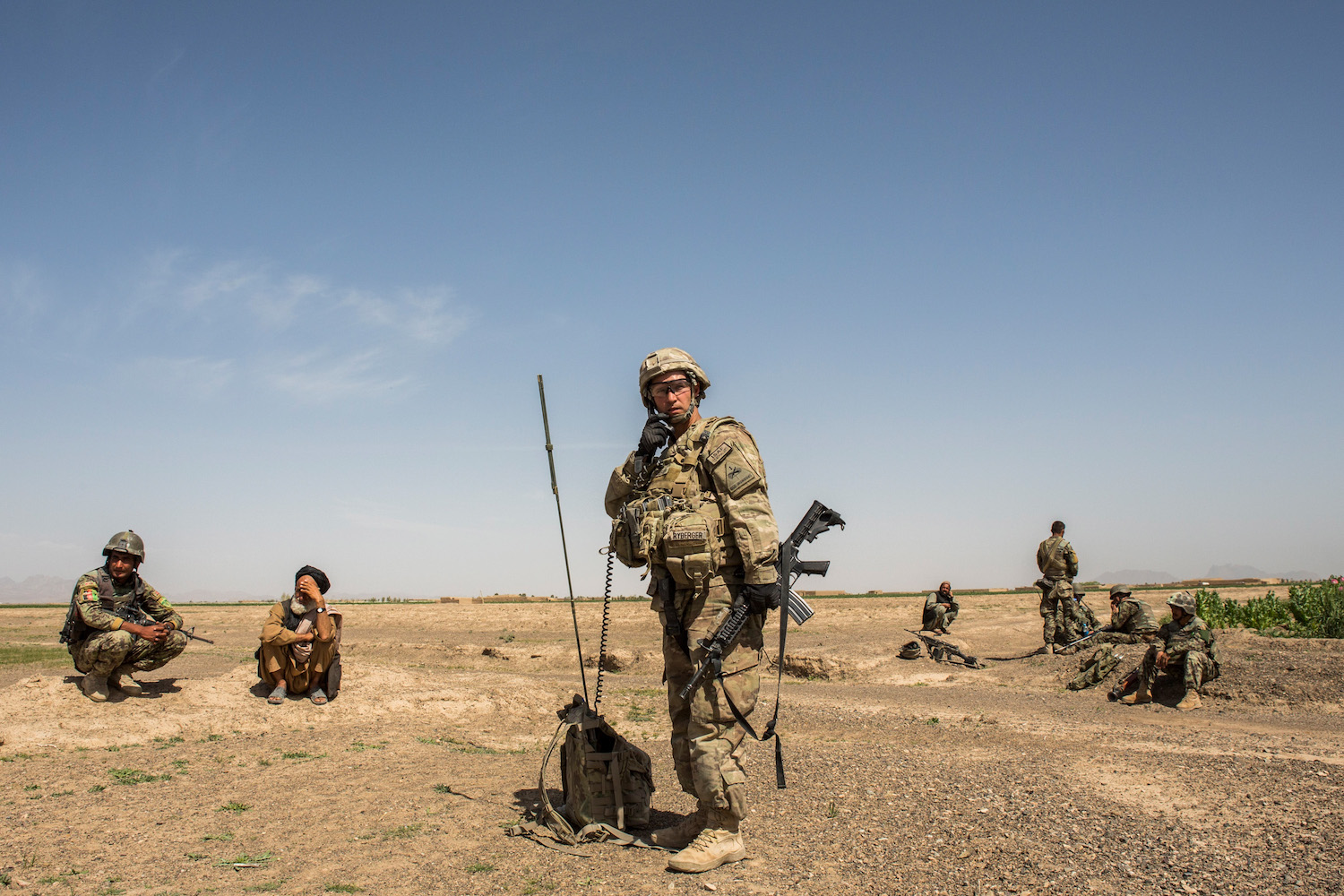
A soldier in the US Army’s 1st Battalion, 36th Infantry Regiment, Bravo Company, speaks on the radio after a United States vehicle hit an improvised explosive device (IED) during a patrol near Command Outpost Azim-Jan-Kariz on March 17, 2013 in Kandahar Province, Maiwand District, Afghanistan. Andrew Burton / Getty
The United States, we are told, is the most powerful nation in world history, the sole superpower, winner of the Cold War, the “indispensable nation,”
a “hyperpower” that has achieved “full spectrum dominance” and “command of the commons” over all other military forces on Earth. Yet the US failed to achieve its objectives in Iraq and Afghanistan, was defeated outright in Vietnam, and since World War II won unambiguous victories only in the first Gulf War of 1991, a war with the strictly limited objective of expelling Iraq from Kuwait, and in various “police actions” against pathetically small and weak opponents.
How can we explain this dichotomy between unparalleled military advantage over all rival powers and a virtually unblemished record of military defeat since the end of the Cold War? And how has the strange mix of great military capacity and inability to utilize that power to attain military victories affected America’s ability to maintain geopolitical hegemony?
American military defeats in fact are the result of three factors.