Neoliberalism Created the Crisis in Chile
Decades of free market fundamentalism are the root cause of the ongoing crisis in Chile. Addressing the staggering levels of inequality will require a break with neoliberal dogma — an inconceivable move for the country’s billionaire president.
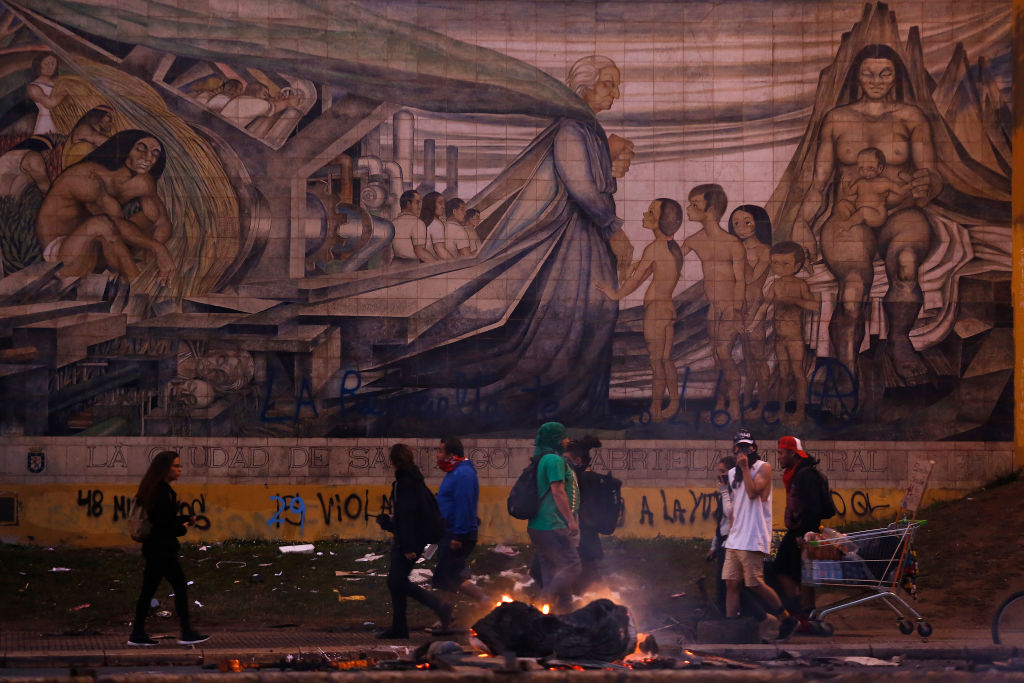
People affected by gas walk in front of a mural of Gabriela Mistral during a protest against President Sebastian Piñera on October 29, 2019 in Santiago, Chile.Marcelo Hernandez / Getty
The color red in the Chilean stock market and the plummeting value of the peso have not been caused by fiscal deficits, economic bubbles, or the political stance of the government. On the contrary, Chile has long been praised for the soundness of its macroeconomic and fiscal policies, as well as the strength of its financial and banking sectors. Its current right-wing government, headed by the billionaire President Sebastian Piñera, is a champion of foreign investment, and has gone so far as to pledge benefits for corporate taxpayers.
The origins of the current economic malaise are social. Chile’s fundamentalist free market economic model, with its extreme inequalities, rising costs of living, and volatility, has pushed people in Chile to desperation. With the government seen to be growing ever closer to corporate interests, a growing sense of injustice has driven people out onto the streets. It will take deep structural change to satisfy their needs.
The Neoliberal Agenda
Chile’s economic model, with its “responsible” monetary and fiscal policies, fundamentally encourages inequality. It is built on low social spending, weak redistributive measures, an economy based on the extraction of economic resources, the privatization of water, and strong private sector responsible for the provision of social services.