We Now Have a Democratic-Socialist “Leisure Agenda”
In the United States, we have few holidays, work long hours, and barely get vacation and sick days. There is a better way — we can win more free time and the fundamental right to relax from our bosses.
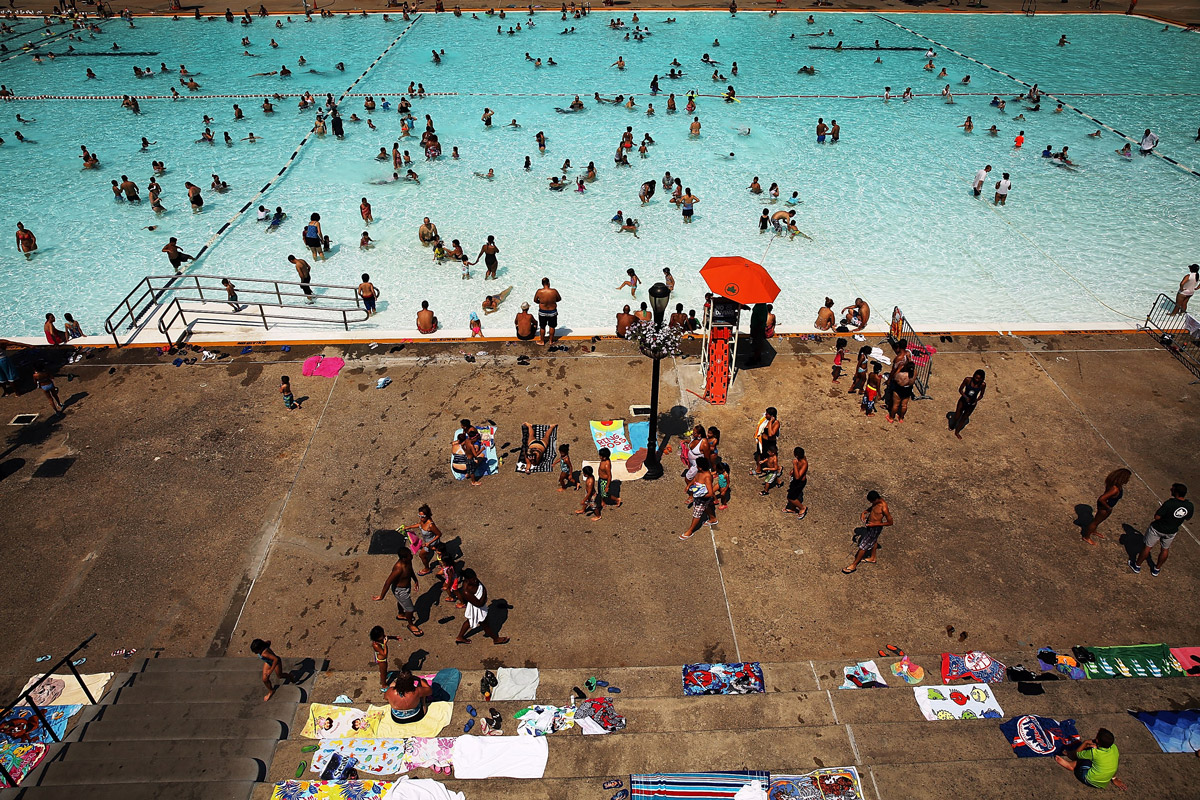
People enjoy a hot afternoon at the Astoria Pool in the borough of Queens on August 17, 2015 in New York City. (Spencer Platt / Getty Images)
For decades our society has entertained the notion that technological innovation will automatically result in more leisure time for all. Capitalists innovate endlessly in pursuit of profit, and the economist John Maynard Keynes predicted that the “strenuous purposeful money-makers may carry all of us along with them into the lap of economic abundance.” In tending to their own economic interests, the capitalist class might actually hasten the arrival of “the age of leisure and of abundance” for all.
But nearly a century later, Keynes’s dream remains unfulfilled. Workers may be more productive, generating higher profit for capitalists, but work time itself has not been significantly reduced. In the United States, worker productivity has more than doubled since 1973, while real wages have stagnated, and corporate profits have ballooned — and though average work hours have declined slightly, Americans still work far more than European counterparts.
Keynes believed “in the long run that mankind is solving its economic problem.” Decades before him, Karl Marx suspected otherwise, warning that the only way workers would get more time to themselves — time which amounts to a loss in potential profits for employers — is by fighting for it. “The determination of what is a working-day,” Marx wrote, “presents itself as the result of a struggle, a struggle between collective capital, i.e., the class of capitalists, and collective labour, i.e., the working-class.”