Time After Capitalism
A hundred years ago, the United States adopted daylight savings time in order to extract more profit from labor. How would we organize time differently if we were free from the demands of capitalism?
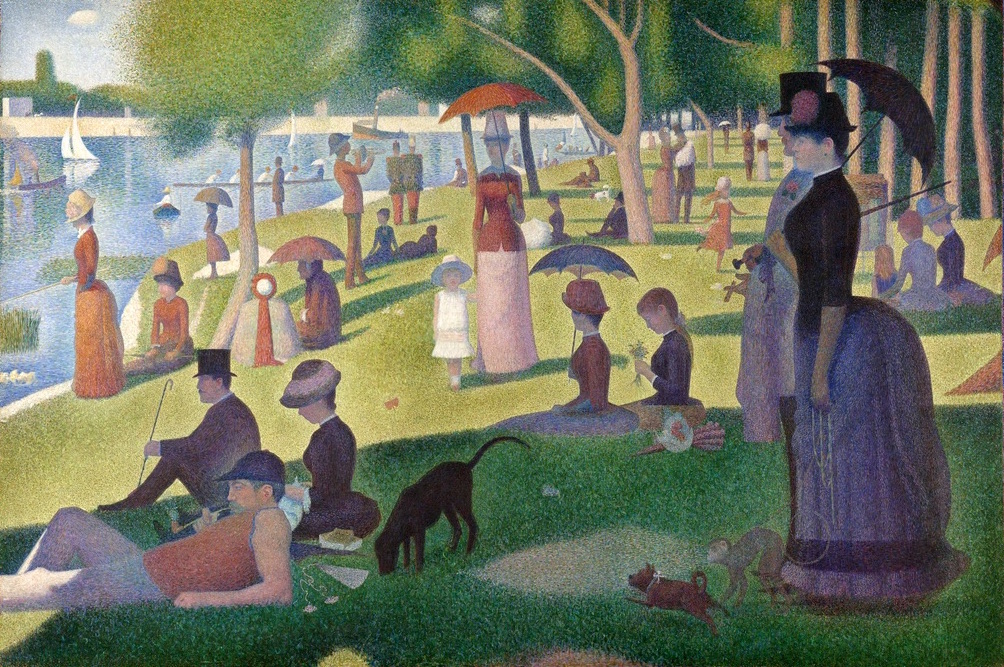
A Sunday on La Grande Jatte, George Seurat, 1884. Wikimedia Commons.
Forget Karl Marx’s old saw about hunting in the morning, fishing in the afternoon, and criticizing after dinner — for many, simply going to bed when we are tired and waking when we are rested is the stuff of utopian, post-capitalist fantasy. A hundred years after the United States adopted daylight savings time — a contrivance developed to extract maximum labor power from workers — we might indulge in some musings on how a different society would make time for workers.
Our world prioritizes profit above all else, and, unless we are wealthy enough to opt out of the labor force, we must organize our lives around securing and maintaining an income-generating job. An entire rhetorical tradition, stretching from the so-called work ethic to “do what you love,” has arisen to distract us from this brutal reality.
The obligation to profit shapes our experience of time: minute to minute, as we hustle to catch the train to work; day to day, as we calculate whether we have enough cat food to avoid the 6 PM supermarket crush; and decade to decade, as we spend years preparing for work and equate our adulthood with climbing the professional ladder. Anyone who has had to cancel plans with friends, put an infant into day care before he or she felt comfortable doing so, or work through a migraine knows how unforgiving the demands of profit are, how they brook no disruption, from personal trauma to simple fatigue.