Ireland’s Prisons for Migrants
Asylum applicants in Ireland are forced to live in prison-like “Direct Provision centers,” whose private managers preside over shocking abuse. And Ireland’s “liberal” prime minister Leo Varadkar doesn’t seem to care.
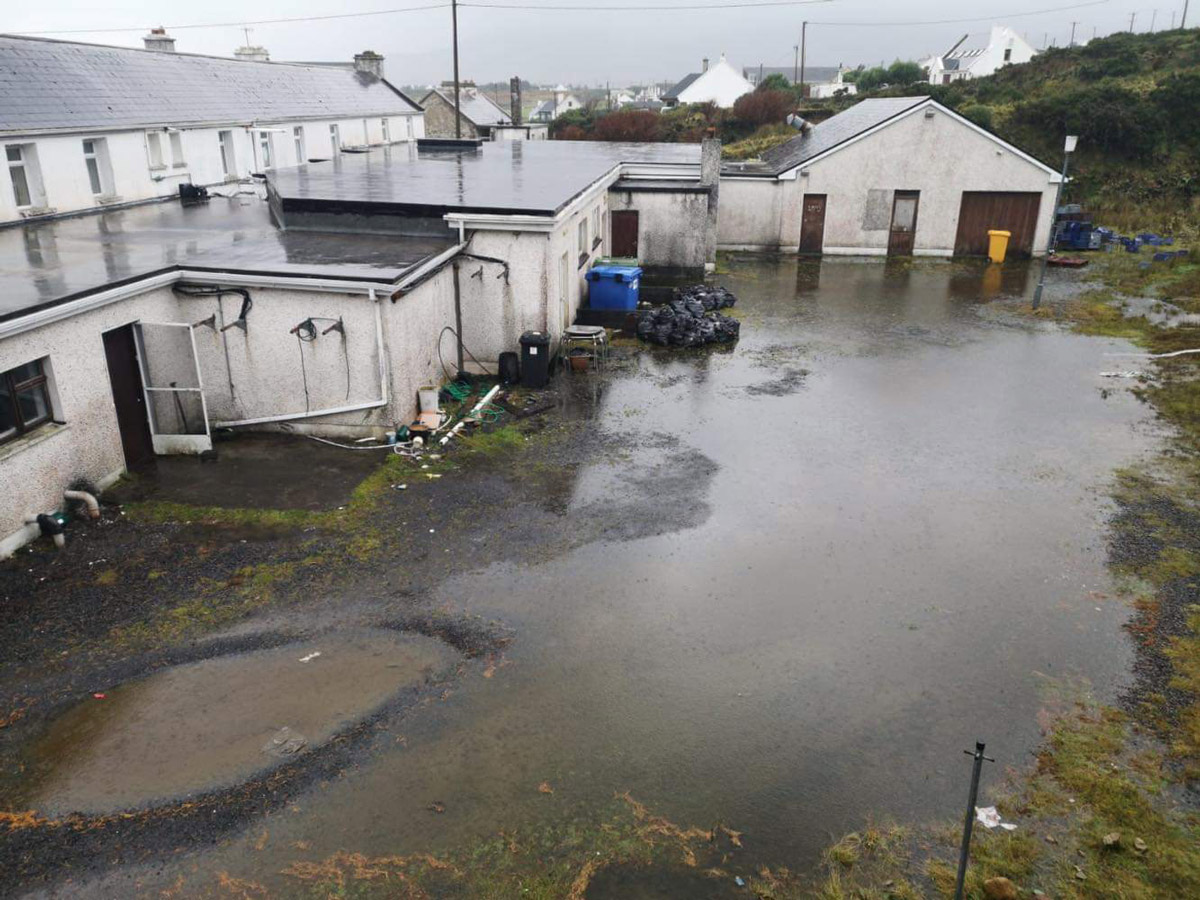
A proposed Direct Provision center in Achill Island on the west coast of Ireland. (Twitter)
Twenty years ago this past October, the Irish government adopted an “emergency measure” to deal with the rising number of asylum seekers. Until then, the statutory rights of asylum applicants and Irish citizens were broadly similar: they received equal access to the labor market, health services, social welfare, and emergency housing. But under the new plan, which was only intended to last six months, asylum seekers were stripped of such entitlements and excluded from mainstream society. Instead of living independently with state support, they were forced into detention centers in remote parts of the island, where they were given three meals per day and a weekly allowance of just €19.10 (or €15.60 for children).
These centers — comprised of disused hostels, nursing homes, guesthouses, and an abandoned holiday park — were privately owned and run for profit. The state would fund private catering and housekeeping services to provide for the detainees until a more workable immigration policy was developed.
That system, introduced in 1999, is known as Direct Provision (DP). Meant to be a temporary measure, it remains in place today. Almost six thousand people now live in the nation’s thirty-eight DP facilities, while a further 1,389 are housed in emergency accommodation. The average time spent in these institutions — waiting for the notoriously punitive immigration service to process an asylum claim — typically ranges from two to four years, but in many cases people are trapped in this legal purgatory for over a decade.