Egypt’s Protests Are a Beacon of Hope
The recent protests demanding the fall of Abdel Fattah el-Sisi were Egypt’s largest since the 2013 military coup. Years of repression have devastated the organized opposition and its networks — but a fresh revolt by Egyptian youth has shown that the regime is anything but secure.
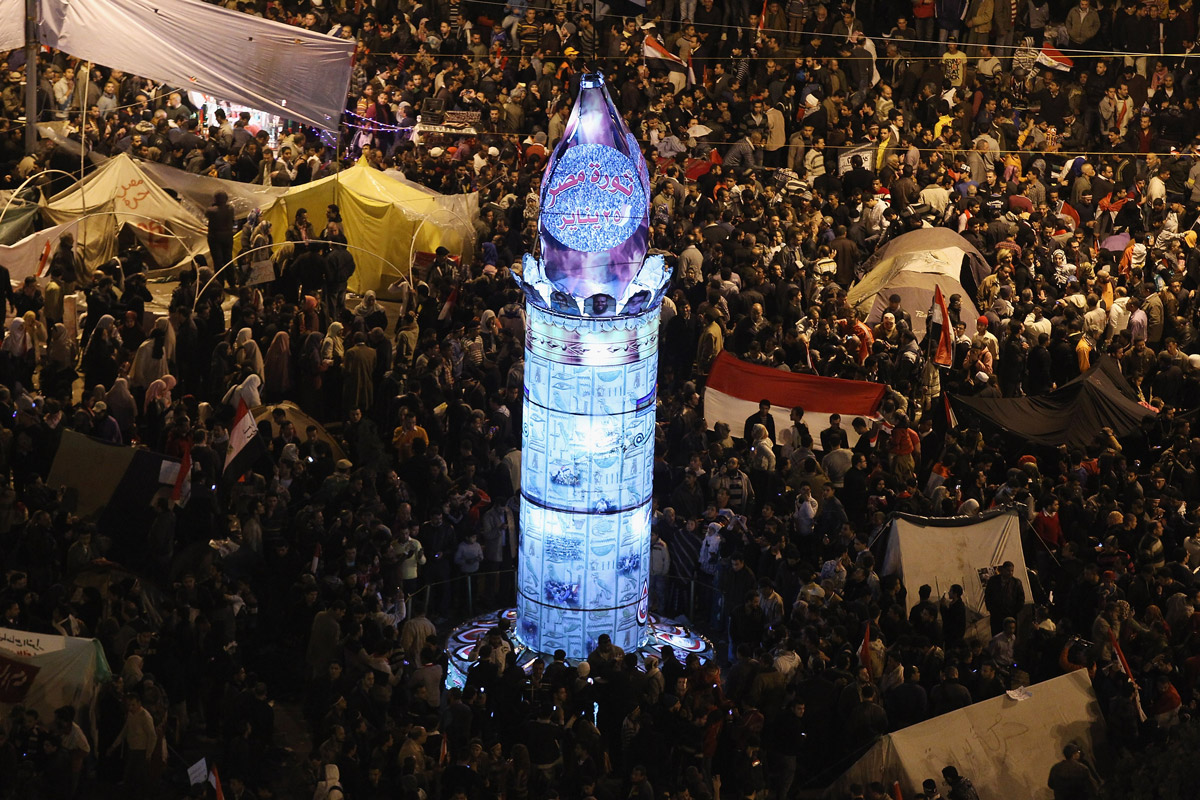
Temporary monuments are erected in Tahrir Square as thousands of Egyptians gather to mark the one-year anniversary of the revolution on January 25, 2012 in Cairo, Egypt. (Jeff J. Mitchell / Getty Images)
On September 20, thousands of Egyptians took to the streets in Cairo and a number of provincial towns, calling for the departure of the country’s military dictator, Abdel Fattah el-Sisi. The protest was a rare one, at a time where at least sixty thousand political prisoners are languishing in jails, political parties have been destroyed or otherwise contained, civil liberties are completely stifled, and torture is endemic.
Street dissent prior to these protests had almost been dead, due to the severe repression. Last time a relatively significant protest occurred it was merely a couple thousand demonstrators, mainly in Cairo, in the spring of 2016, against Sisi’s handover of two strategic islands in the Red Sea to Saudi Arabia.
The state reacted to the protests in what has become the fashion following the 2013 military coup. Telecommunications were disrupted; websites were censored. More than three thousand people were arrested, activists’ homes were raided, lawyers and dissidents were kidnapped and tortured, and both privately run and state-owned media issued a hysterical wave of defamation against protesters.