Between Party and Movements
Under MAS, Bolivia has seen massive decreases in poverty — but its social movements have grown weaker.
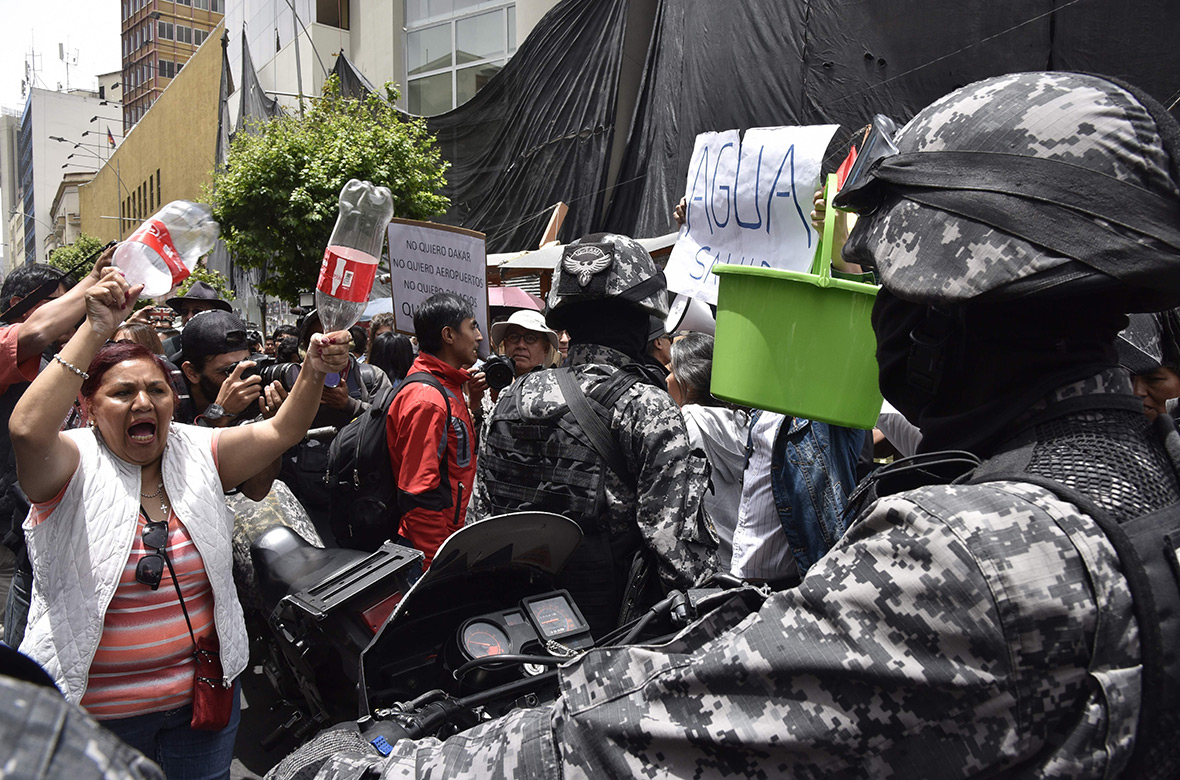
In Bolivia, the tale is very similar to what’s going on in Ecuador, but with two fundamental differences. One is that social movements actually put the Evo Morales government into power. It wasn’t as if there was a party that was created afterwards or as a vehicle simply to move a social-democratic or left president into power.
The other, which is fundamental to understanding Bolivia, is that Bolivia is a majority-indigenous country. So the dominant paradigm of struggle within the Bolivian context is the struggle for indigenous rights and indigenous people. Indigenous people have resisted colonization — struggled against the light-skinned elites that have run Bolivia — for over five-hundred years.
Bolivia has long been a mining country, completely dependent on export mining. Whether organized through indigenous unions (or labor unions, since the 1950s) or the more recent coalition of indigenous, neighborhood, and labor organizations, the way that politics is and has been done consistently in Bolivia, perhaps more than almost any other country in the world, is in the streets. This has created a political system in which there may be backroom deals between elites, but any kind of progressive process has almost always occurred when large numbers of people have taken to the streets.