Enough with the “Clever Men” of British Politics
Political life in Britain has long been plagued by the mystique of the “clever man” — the supposedly brilliant Oxbridge mandarin. But more often than not, the Latin-spouting emperor has no clothes.
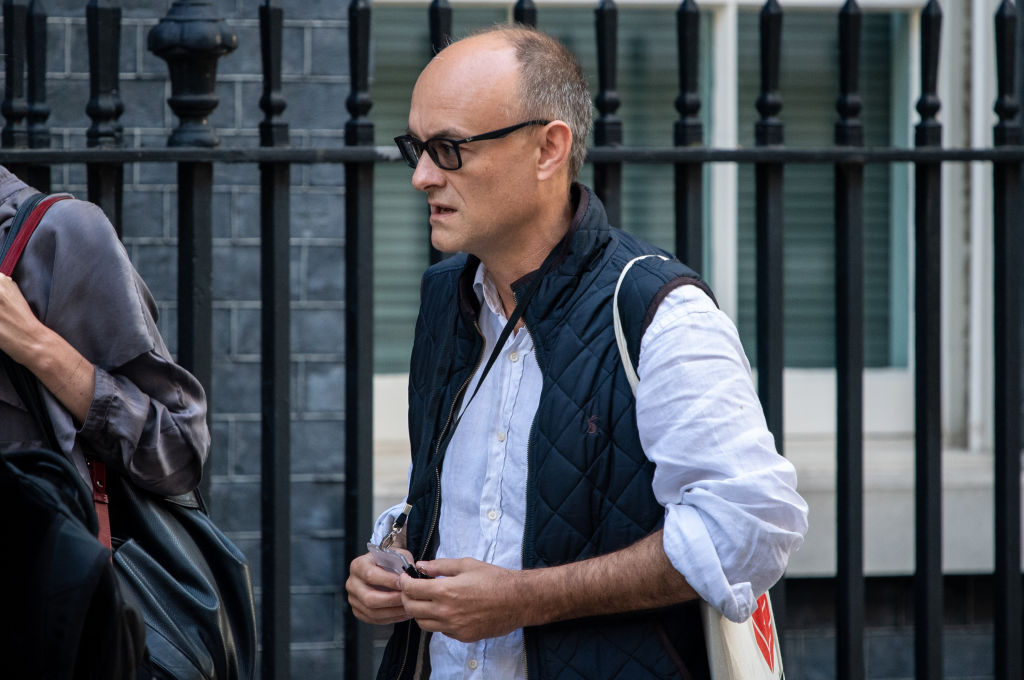
Dominic Cummings, special adviser to Prime Minister Boris Johnson, arrives at 10 Downing Street on August 7, 2019 in London, England. (Chris J Ratcliffe / Getty Images)
Until recently, Dominic Cummings was mostly credited with having a key role in former education minister Michael Gove’s radically unpopular overhaul of the English education system, overseeing a move that sought to institute a system akin to charter schools in England that put the Conservative Party on a collision course with teachers and parents alike. Then, upon leaving government, he worked for the Vote Leave campaign in the European Union referendum, credited with coining the divisive but catchy slogan “Take Back Control.”
Now he has been appointed a special adviser to Prime Minister Boris Johnson, an appointment that provoked alarm among many in Westminster, given Cummings’s tendency to adopt kamikaze strategies that may attain the proposed ends but cause chaos along the way. Cummings also has a reputation among Westminster insiders as a ferocious intellect. In his time outside of government, aside from working on the Vote Leave campaign, he had a tendency to fire off blog posts of an interminable length, unfettered by any editor and favoring sheer volume over perspicacity. Whenever Cummings is brought up in passing conversations in Westminster, the length of his blogs has been mentioned as proof of a restless intellect, but people similarly boast of never having finished reading any of his posts: to pass as smarter than your peers, overshoot your word count and do away with editors, and you could easily fool a good number of people.
Cummings isn’t stupid, but the terms in which he and others are spoken of belies a deeper problem in British politics: our idea of what counts as qualification in politics is purely informal, given that no formal qualifications exist. Civil servants have strict entry requirements, post-college exams, and assessment centers before they reach entry-level jobs. To become a member of Parliament, you need to win selection through your chosen party, then convince enough of your constituents to vote for you. To be a special adviser, you need to be trusted enough by your employer and share their ideological mindset. So you’re left with a clutch of MPs and their advisers tasked with cobbling together a coherent political roadmap with little but their own loosely defined historic ideology and willful self-belief to go on.