Britain’s Politics Are Moving Left — and Right
Britain has had two elections in recent weeks, and the lessons are clear: Labour’s grassroots strategy under Jeremy Corbyn is working — and the far right remains a major threat.
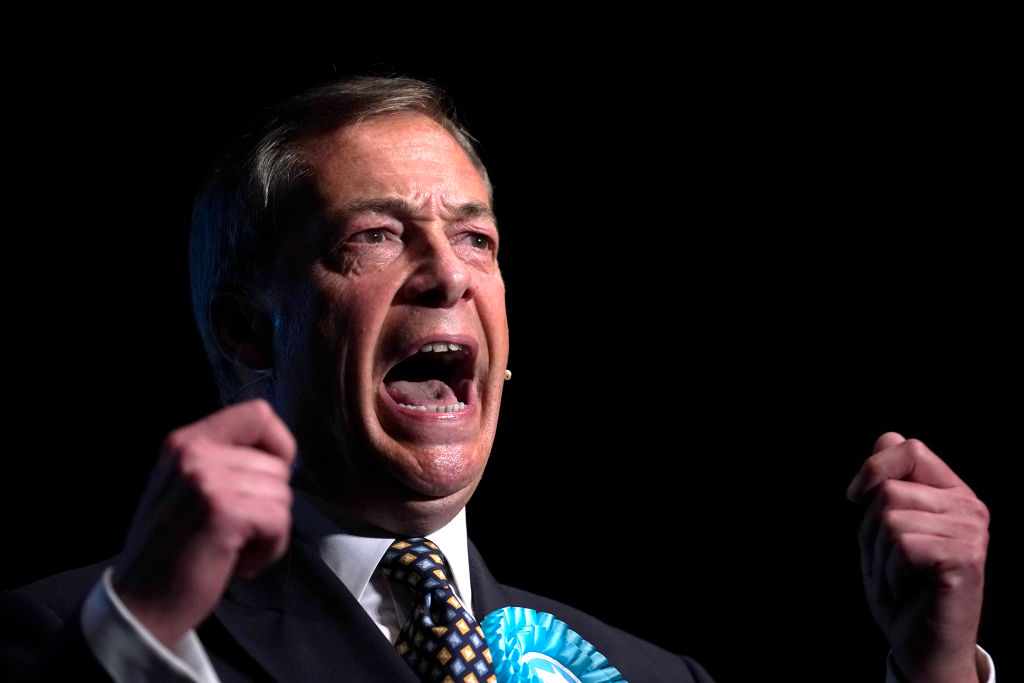
Brexit Party leader Nigel Farage addresses supporters during a rally on June 1 in Peterborough, England. Christopher Furlong / Getty
Just weeks after the European elections, voters in England’s Peterborough constituency were back at the ballot box surrounded by the press. In December 2018 Fiona Onasanya, the Labour member of parliament for the Midlands town, was found guilty of perverting the course of justice; after being expelled by the party Onasanya announced her intention to continue on as an independent, but her constituents forced a recall petition and a by-election was called.
The news of the by-election and its date came amid the European election campaigning, and Nigel Farage’s newly founded Brexit Party announced it would stand. After the new party’s electoral land grab at the expense of Farage’s old bastion, the United Kingdom Independence Party (UKIP), the possibility of winning its first MP three months after its launch was a very realistic prospect.
The seat was volatile, too: from 1979 until 2015, aside from Tony Blair’s first two terms, the seat had been held by the Conservatives. Labour won it back in 2017 by a slim majority of 607 — symbolically, from Stewart Jackson, the special adviser and chief of staff to then-Brexit secretary David Davis. Peterborough functions as a weathervane constituency, tending to show the direction in which the political winds are shifting.