Puerto Rican People’s Assemblies Shift From Protest to Proposal
Following the resignation of Governor Rosselló, a series of people's assemblies have emerged throughout Puerto Rico to keep the conversation — and the popular movement — going.
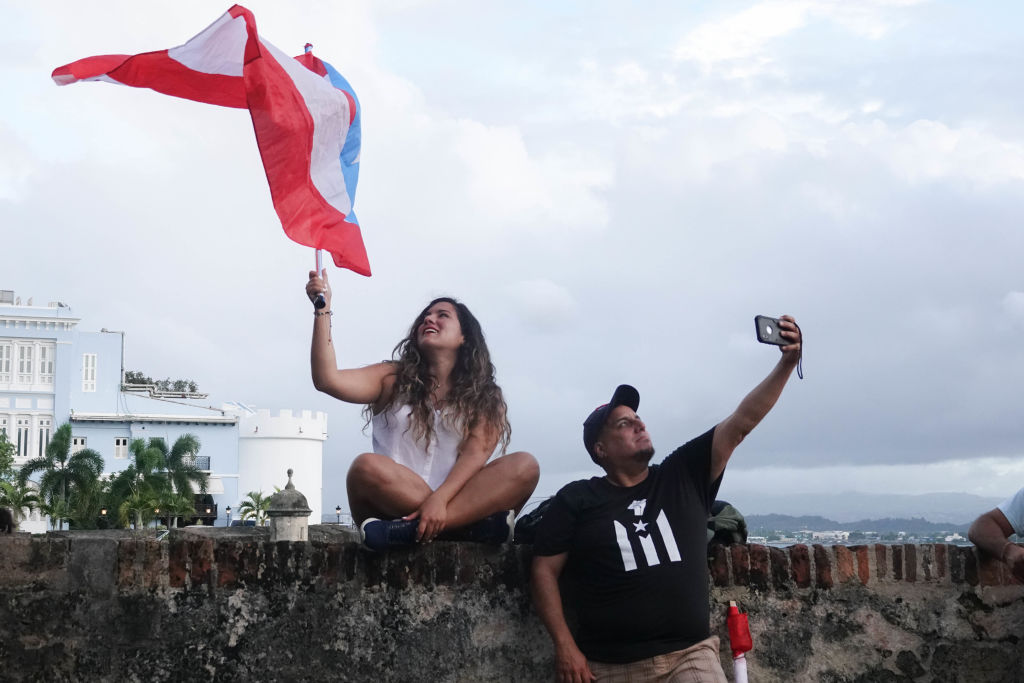
Protesters gather in Old San Juan to celebrate the departure of Governor Ricardo Rosselló following a chat message scandal and days of demonstrations on August 2, 2019 in San Juan, Puerto Rico. (Angel Valentin / Getty Images)
A microphone sat in the center of a crowd under some trees in Plaza Las Delicias in Ponce, the largest city on the southern coast of Puerto Rico. Some of the people present occupied the concrete benches in the outer perimeter of the circle around the microphone. Others had brought beach chairs or sat on the ground, and some stood along the edges, arms crossed, looking in. It was a little past six in the evening.
Veronica, a young woman from the University of Puerto Rico at Ponce, called the assembly to order and welcomed the crowd of some eighty people, noting that many had crossed paths during recent protests. “In the many conversations that emerged while the people of Puerto Rico took to the streets to request the resignation of Ricardo Rosselló, we shared the same question: What will happen after Ricky resigns?” she said. “So, we met a few days ago to organize the proposal that we bring to you today: the people’s democratic assembly.” This was the first of many people’s assemblies, called by diverse groups across the island to discuss the next stage in Puerto Rico’s newly acquired experience in popular democracy.
The exercises of direct democracy that sprouted in the streets through massive protests — taking from dance to motorcycle demonstrations, among others — led to the resignation on July 25 of Governor Ricardo Rosselló and crystallized for Puerto Ricans a consummation of popular power. The outcome confirmed that an organized group of citizens can exert enough pressure to force a détente on the state. Following Rosselló’s resignation, however, many have expressed concerns about possible demobilization. Some fear that as people return to the routines of life, the fiery resistance struggles of July will gradually fade from our collective memory. Were the protests and marches the beginning and end of this political awakening? How far can this newly acquired power be taken?