Puerto Rican Politics Will Never Be the Same
Disgraced Puerto Rican governor Ricardo Rosselló is slated to leave office today. It’s a victory for the mass protest movement — but as elites struggle to name a successor, the colony’s future remains uncertain.
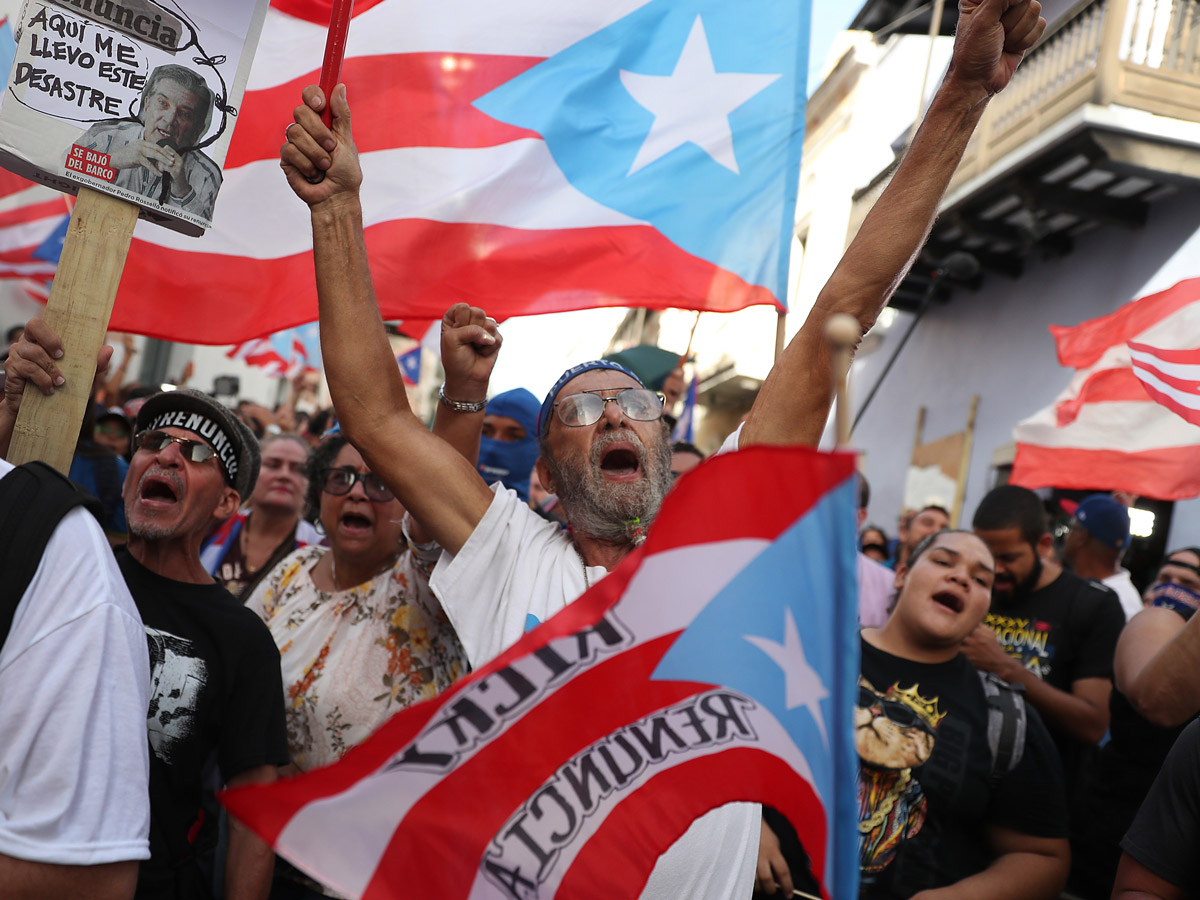
Protesters demonstrate near a police barricade on a street leading on July 24, 2019 in Old San Juan, Puerto Rico. (Joe Raedle / Getty Images)
For weeks, Puerto Rico has been rocked by mass protests against the governor, Ricardo Rosselló. The protests began after the Center for Investigative Journalism in Puerto Rico released hundreds of pages of private chat logs, revealing conversations between Rosselló and his political associates in which they mock hurricane survivors, use misogynistic and homophobic slurs, and display a stunning lack of political commitment to ordinary Puerto Ricans, to say nothing of personal compassion. After initially trying to weather the storm and remain in office, Rosselló announced last week that he would resign from his position as governor — a first in Puerto Rican history. His resignation is slated to take effect today.
Nearly all of Rosselló’s cabinet resigned in scandal over their own participation in the leaked chat logs, leaving the governor without an obvious successor. After justice secretary Wanda Vásquez announced she didn’t want the job, Roselló nominated Pedro Pierluisi to be his secretary of state on Wednesday, placing the former resident commissioner for Puerto Rico first in the line of succession. After a grueling day of confirmation hearings yesterday and an ongoing special legislative session today, it’s not clear whether Pierluisi has the votes necessary to become secretary of state. (Vásquez, for her part, has reluctantly announced that she’ll accept the governorship if it comes down to it.) The stage seems set for a constitutional crisis in Puerto Rico.
Although the leaked text messages were the immediate cause of the unrest, popular discontent goes back much further. Puerto Ricans have lived under punishing austerity since the island’s financial crisis began in 2006. And in 2016, the United States imposed the colonial Fiscal Control Board to protect the interests of private lenders who owned portions of Puerto Rico’s sovereign debt. (Pierluisi has faced blistering criticism over the past several days for his strong ties to the Fiscal Control Board, which senate president Thomas Rivera Schatz called “Puerto Rico’s number one enemy.”) Oftentimes with Rosselló’s collaboration, the unelected junta — as it is known in Puerto Rico — has slashed public education on the island, raised tuition at public universities, and decimated Puerto Rico’s health care system. In 2017, Hurricane Maria brought even more devastation — and further revealed the gulf between ordinary Puerto Ricans and the elite political class.