“Kashmir Has Been Turned Invisible”
India's military blockade of Kashmir is breathtaking in its brutality and violence. We can't let them silence Kashmir's dreams for freedom and justice.
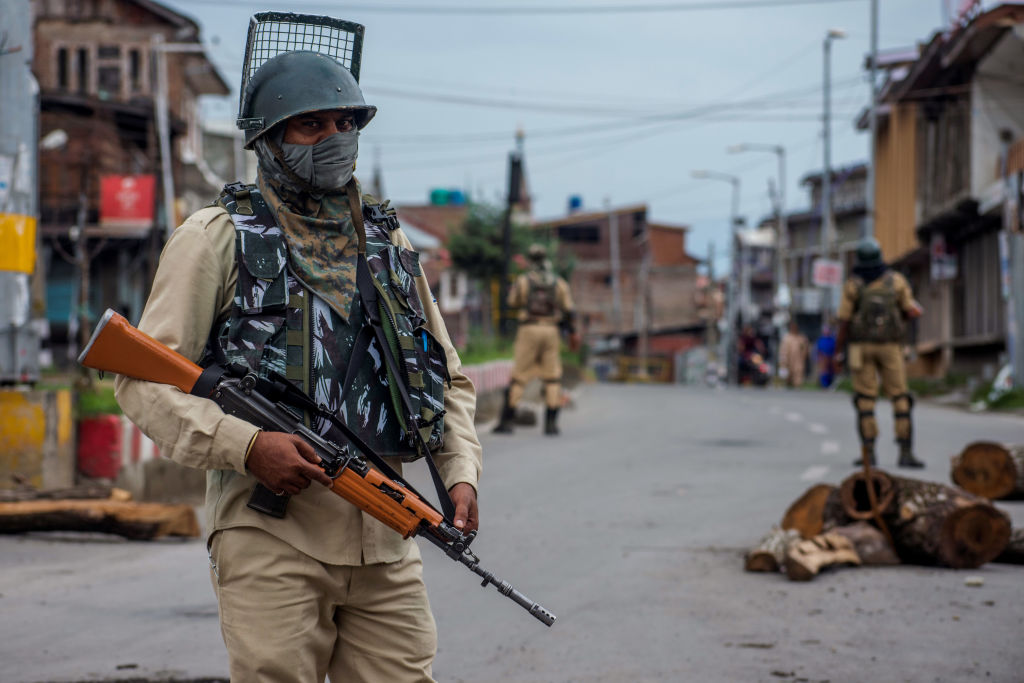
Indian government forces stand alert amid curfew-like restrictions in the old city, after Indian authorities revoked Article 370 and Article 35A on August 17, 2019 in Srinagar, the summer capital of Indian-administered Kashmir. (Yawar Nazir / Getty Images)
The phone rings. “How are you? We all are fine here.”
“I am fine. How did you manage the call?”
“District Police Lines!”
“Don’t bother yourself again. We can stay without talking, but don’t seek their help.”
Laughter on the other end.
The allotted thirty seconds are over.
(The call ends.)On a different phone, another call begins.
“How are you? It is all fine here.”
“I am fine. Have there been any arrests?”
Hurried answer. “No, no, nothing.”
(The call ends.)Another call. “Can you tell our daughter we are fine here?”
“Sure. Are you?”
“Do you need anything?”
“Do you?”
The answers are hard to come by.
(The call ends.)Yet another call. “Can you appear in a TV debate? Mother wants to see you.”
“Really?”
“Yes, she thinks that is the only way she can see your face.”
“I will try.”
(The call ends.)
How does one deal with a siege of coerced invisibility over the place you call home? With a military blockade, enforced by a massive influx of men and machines of war along with a more chilling development, a forced silence and the deliberate concealment of not just the actions of the occupying power, but of the people they have brutalized for decades? This is the best description we have of our homeland, Kashmir.
It was the evening of August 4 when we last spoke at any length to our families. “We do not know when we will be able to talk to you again,” they cautioned, “or if we will at all.” And since then, a deafening silence. Our repeated calls have been met with the same automated response: “The number is currently switched off.” The thirty-second calls that are allowed from police stations in Kashmir are moderated; families have to wait for hours in a queue before they can get on the phone. The level of humiliation and attempt at absolute control — who people can communicate with, what they can say — is unprecedented, even for a people used to living under occupation. “Kashmir,” a local journalist remarked, “has been turned invisible even inside Kashmir.”