Why Conservatives Hate Democracy
From the 1930s to today, the modern conservative movement has tried to restrict majority rule at every turn — because they know a mass democratic movement poses an existential threat to their power.
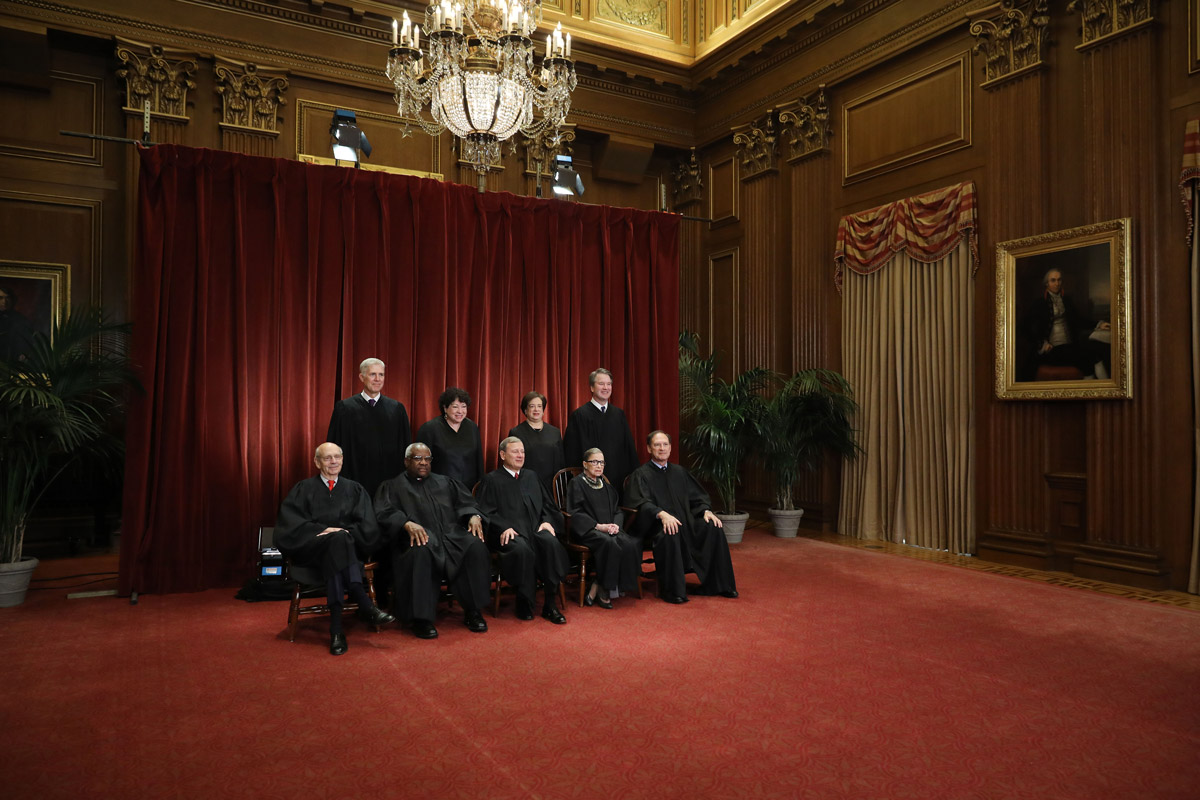
US Supreme Court justices pose for their official portrait on November 30, 2018 in Washington, DC. (Chip Somodevilla / Getty Images)
Throughout the 2016 election cycle, and immediately after, commentators repeatedly warned that Donald Trump represented a fascist threat to democracy, one so completely anomalous to the American experience that he was best compared to the fascist dictators of 1930s Europe, or perhaps Latin American caudillos and African strongmen. Between his attacks on the free press, his bigoted rhetoric, and his weak understanding of checks and balances, the argument went, Trump rejected the American ideal of liberal democracy itself.
It is true that Trump’s openly racist and misogynist rhetoric has plunged mainstream US political discourse to depths unseen since the days of Jim Crow. But Trump’s time in office has also revealed a more mundane truth: the president, for all his illiberalism and contempt for democracy, is a product of the mainstream American conservative movement.
Trump’s approval rating with Republican voters hovers around 90 percent, and there are few, if any, Republican politicians left who are willing to publicly criticize him. In 2012, Mitt Romney sought Trump’s endorsement, despite (or perhaps because of) his leading role in the racist birther conspiracy theory. Leading conservative media outlets that rejected Trump as an authoritarian clown in the 2016 Republican primary have by and large rebranded themselves as vocal supporters of the president and critics of the opposition. David Brooks and the rest of the Never Trumpers that remain are respected by moderate New York Times subscribers and cable news viewers, but not by conservatives.