Never Forget the Rana Plaza Massacre
Six years after the Rana Plaza garment factory collapse killed over a thousand people, Bangladeshi workers are striking for better wages and safer conditions.
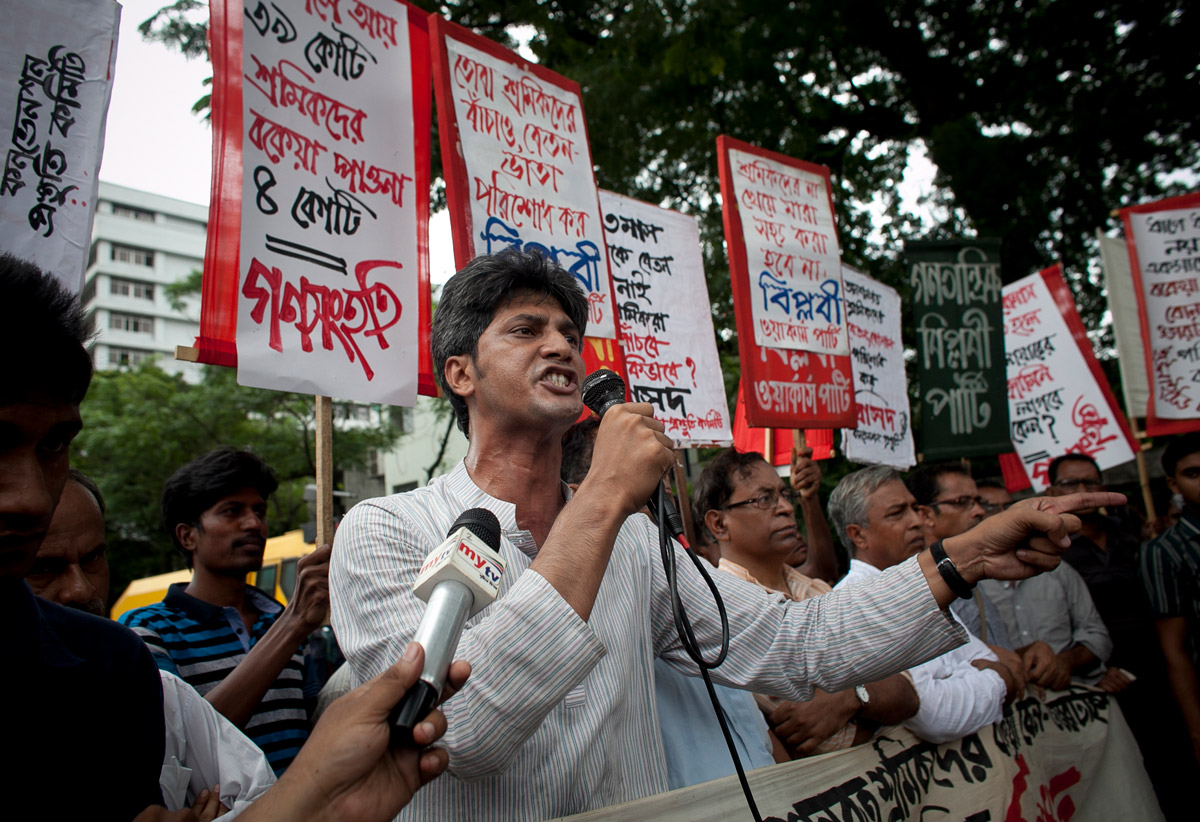
Garment workers on a hunger strike demonstrate against their employer, demanding three months of unpaid wages, on August 4, 2014 in Dhaka, Bangladesh. (Allison Joyce / Getty Images)
On April 23, 2013, a local television crew shot footage of cracks in the Rana Plaza factory complex in Dhaka, Bangladesh. The building was evacuated, but the owner of the building declared it safe and told workers to come back the next day. One Walmart supplier housed in the building, Ether Tex, threatened to withhold a month’s wages from any workers who didn’t return.
The building collapsed on April 24, and when the rubble was finally cleared, 1,134 people were found dead, with another 2,500 injured. It was the worst industrial disaster in the history of the garment industry.
From the ashes of Rana Plaza emerged the Bangladesh Accord on Fire and Building Safety. An international compact among nonprofit organizations, Western manufacturers and retailers, local Bangladeshi union federations, and several major global unions, the Accord has monitored fire and building safety in 1,700 factories in Bangladesh over the past six years for signatory brands.