Chernobyl: The Show Russiagate Wrote
HBO's Chernobyl isn’t the show this event deserves.
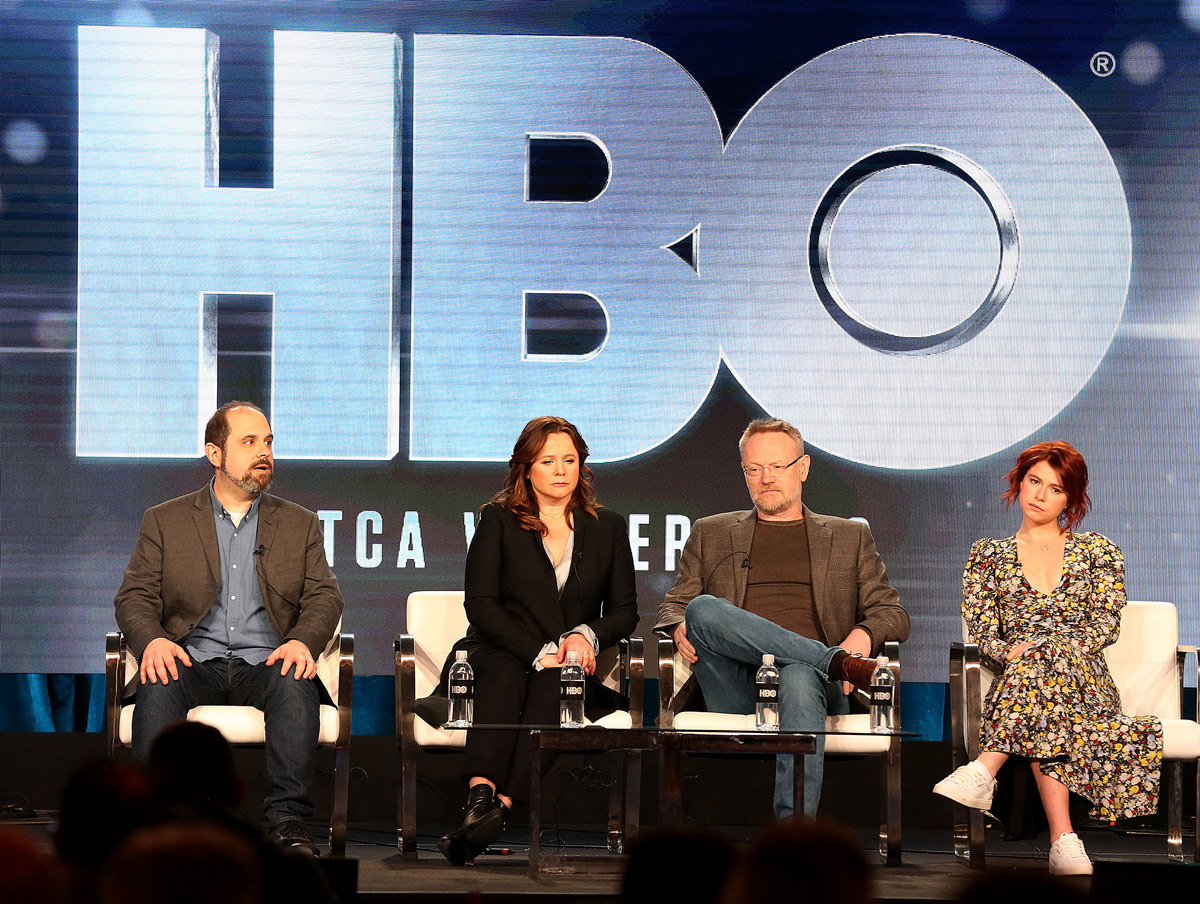
Craig Mazin, Emily Watson, Jared Harris, and Jessie Buckley (left to right) of Chernobyl speak during the HBO segment of the 2019 Winter Television Critics Association Press Tour on February 8, 2019 in Pasadena, California. (Frederick M. Brown / Getty Images)
The five-part HBO dramatic series Chernobyl arrives shortly after several nonfiction books about the 1986 nuclear disaster in Ukraine, which resulted in the permanent evacuation of more than a quarter million people, the deaths of about fifty, and the shortened lives, due to long-term illnesses, of approximately four-thousand. The disaster undermined citizens’ faith in the Soviet Union and helped bring about its collapse. This renewed interest in Chernobyl makes sense at a time when our present society also faces political instability and environmental catastrophe on an even larger scale.
Unfortunately, Chernobyl isn’t the show this event deserves. Many of Chernobyl’s glowing reviews seem to confuse the show’s goriness for truthfulness. The show is, in fact, the least truthful when it is the most explicit. A Forbes magazine article convincingly details how the show spectacularly misrepresents the effects of radiation poisoning. The New York Times also heavily criticizes Chernobyl for its “cheap theatrics.”
But Chernobyl’s shock value isn’t the only thing driving interest in the show. Its politics are at the center of the commentariat’s obsession with the miniseries. As series writer Craig Mazin wrote on Twitter: “The lesson [of Chernobyl] is that lying, arrogance and suppression of criticism is dangerous. The flaws that led to Chernobyl are the same flaws shown by climate change deniers today.”