The Psychology of Russiagate
Glenn Greenwald on Russiagate and the comforting answers it offers to despondent liberals.
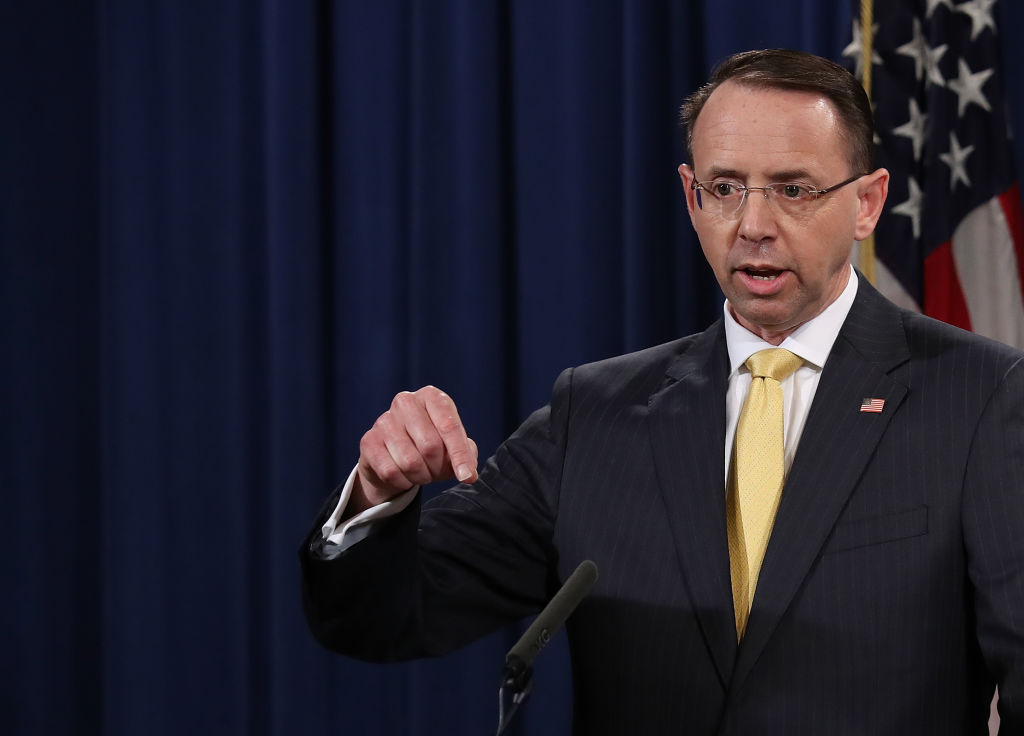
US deputy attorney general Rod Rosenstein announces the indictment of thirteen Russian nationals and three Russian organizations for meddling in the 2016 US presidential election on February 16, 2018.Win McNamee / Getty
Did Russia’s “troll army” steal the 2016 election? Daniel Denvir, host of Jacobin Radio‘s The Dig, spoke to the Intercept’s Glenn Greenwald about Russiagate, mass surveillance, and “the resistance” to Donald Trump. The following is a condensed version of their conversation.
The Politics of Russiagate
Daniel Denvir
Let’s start with the Russian troll army. What did Robert Mueller charge in February of this year, and what do you make of it?
Glenn Greenwald
The most recent indictment charges thirteen Russian nationals, individuals and entities, with two things. One, creating fake identities for social-media usage with the intention of sowing discord in the American political landscape by disseminating inflammatory messages — sometimes supporting Bernie Sanders, sometimes supportive of Donald Trump, sometimes encouraging minorities not to vote, maligning Hillary Clinton, those sorts of things. So fake Facebook identities, fake Twitter identities, designed to make people who are actually Russian appear to be American, communicating to fellow Americans about the election with the intent, according to Mueller, of sowing discord.