Against the Great Man Theory of Historians
Robert Caro has penned more magisterial works of history than nearly anyone else. But without accounting for the often-invisible work of others in his research, his new memoir Working is not so much inspiration as an exercise in self-celebration.
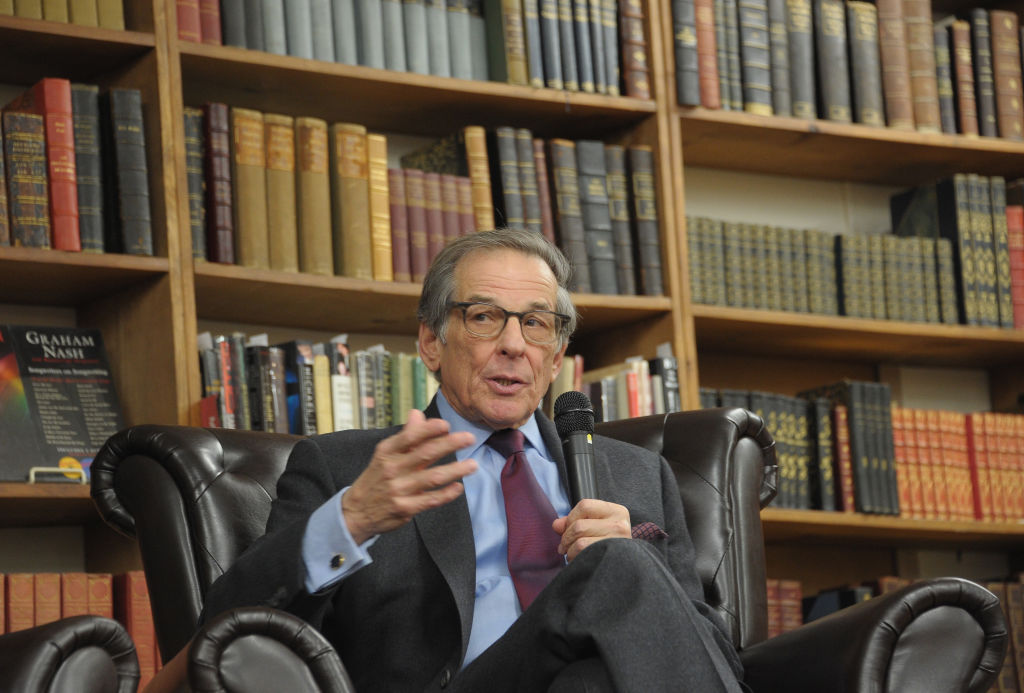
Robert Caro addresses the audience at Strand Bookstore on March 29, 2013 in New York City. (Michael Loccisano/Getty Images)
Midway through chapter fifteen of his 1974 book The Power Broker, Robert Caro describes the relentless work ethic of his subject, Robert Moses. Upon being appointed secretary of state under New York governor Al Smith in the late 1920s, Moses whittled away every distraction in his life. He gave up bridge, golf, and Sundays with his family. His wife, Mary, took over paying the bills and clothes shopping. She even hired a barber to come to Moses’s office to trim his hair.
Most of all, Moses disliked restaurants. “Lunches,” Caro writes, “were a constant source of irritation to Moses; he hated to interrupt his work for them.” If he was compelled to take midday sustenance with company, Moses insisted that a secretary bring him — and his companion — a sandwich.
Lunch upsets Caro for similar reasons, as he notes in his brief new book on his own career (a placeholder, we’re told, for a full-length memoir yet to come). Once, while typing in the Frederick Lewis Allen Room at the New York Public Library, Caro’s concentration was interrupted by an elderly gentleman with the temerity to ask him to lunch. He recounts what happened next: “I found myself on my feet with my fist drawn back to punch the guy.” And as for his editor? Caro picked him — longtime Knopf editor, Robert Gottlieb — because every other one Caro’s agent introduced him to took him out to fancy lunches. “I don’t go out for lunch,” Gottlieb told Caro, “but we can have a sandwich at my desk and talk about your book.”