Memory Matters
We should remember the Civil War and Reconstruction for what they were: periods of liberation that were snuffed out by white elites.
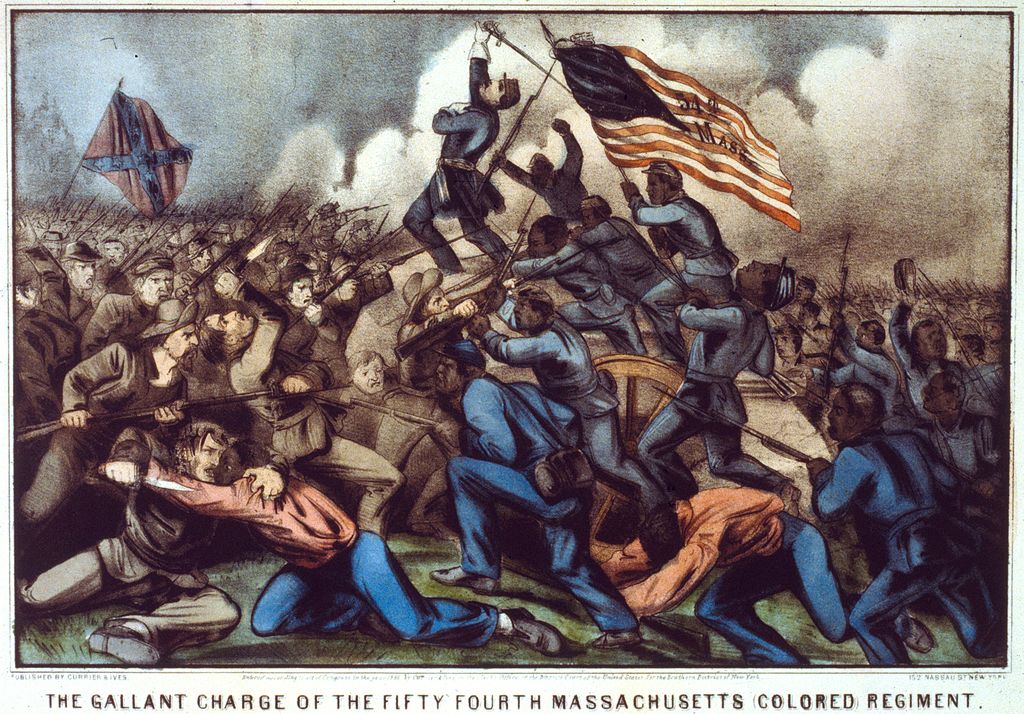
“The Gallant Charge of the Fifty-Fourth Massachusetts Colored Regiment,” July 18, 1863.MPI / Hulton Archive / Getty
In 2009, in the early days of the Obama administration, several prominent historians petitioned the president not to send a wreath memorializing Confederate soldiers who died in the Civil War. Scholars like James McPherson — best known for his one-volume work on the Civil War era, Battle Cry of Freedom — argued that the tradition needed to be broken so the nation could finally come to grips with what the war had truly been about: the Southern states’ quest to defend slavery. That Obama’s presidency began with this somewhat forgotten request, and ended with a national debate over the fate of hundreds of Confederate memorials dotting public spaces, is a reminder of how much memories of the past still color contemporary politics.
In This War Ain’t Over: Fighting the Civil War in New Deal America, historian Nina Silber takes us back to another era of American history when scholars, public intellectuals, activists, and ordinary workers all argued about the purpose and the lessons of the American Civil War.
During the Great Depression, African Americans were more assertive than ever about their interpretation of the war and its aftermath — as a period of liberation that was snuffed out when white Northern elites turned their back on Reconstruction. While most white Americans wanted to remember the Civil War as a tragic misunderstanding between sections of the nation, punctuated by heroism on both sides, African Americans refused to succumb to such an easy reflection on the past.