With Child and Out of a Job
Pregnancy discrimination is rampant and devastating for its victims. But in a tight labor market, it may be a problem for capital, too.
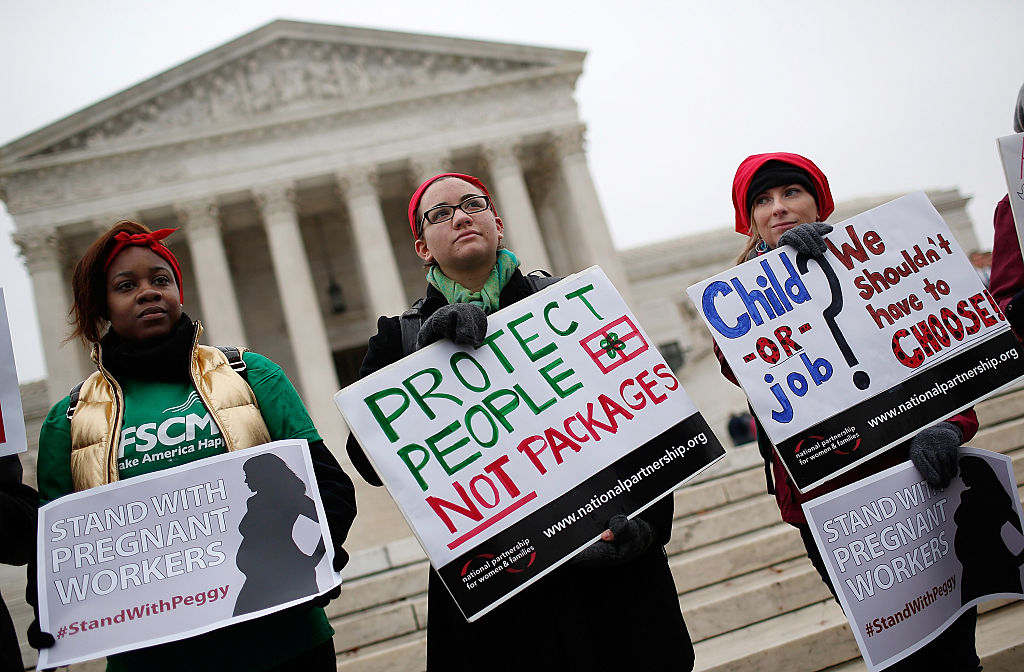
Protesters gather outside the US Supreme Court while the court hears arguments in the Young v. UPS case December 3, 2014 in Washington, D.C.Win McNamee / Getty
In the summer of 2013, working on an article for Glamour magazine, I interviewed a Rent-a-Center collection agent, a train conductor, an office manager, and a health care worker, all of whom had one thing in common. They had all faced pregnancy discrimination at work.
The legal experts I talked with at the time said this was happening more and more. Our economy kept eking out low-wage, nonunion jobs, and too few even of those; with unemployment then at 7.6 percent, workers were increasingly disposable. Workers who can and do get pregnant were particularly disposable. Pregnancy discrimination is far more likely to affect women in the lower rungs of the nonunion working class, who often have intensely physical jobs which require some modest accommodation if they’re going to be done by a pregnant person. These workers also live paycheck-to-paycheck and their families can’t easily forgo their earnings.
Because capital enjoyed a plenitude of available workers in 2013, there wasn’t much political will to help improve workplaces for pregnant women. (Although a few relatively progressive places like New York City did address the problem.)