“Get Off My Lawn” Goes Digital
Home surveillance apps like Ring and community social networks like Nextdoor aren't making anyone safer. They're allowing paranoid jerks to harass their neighbors.
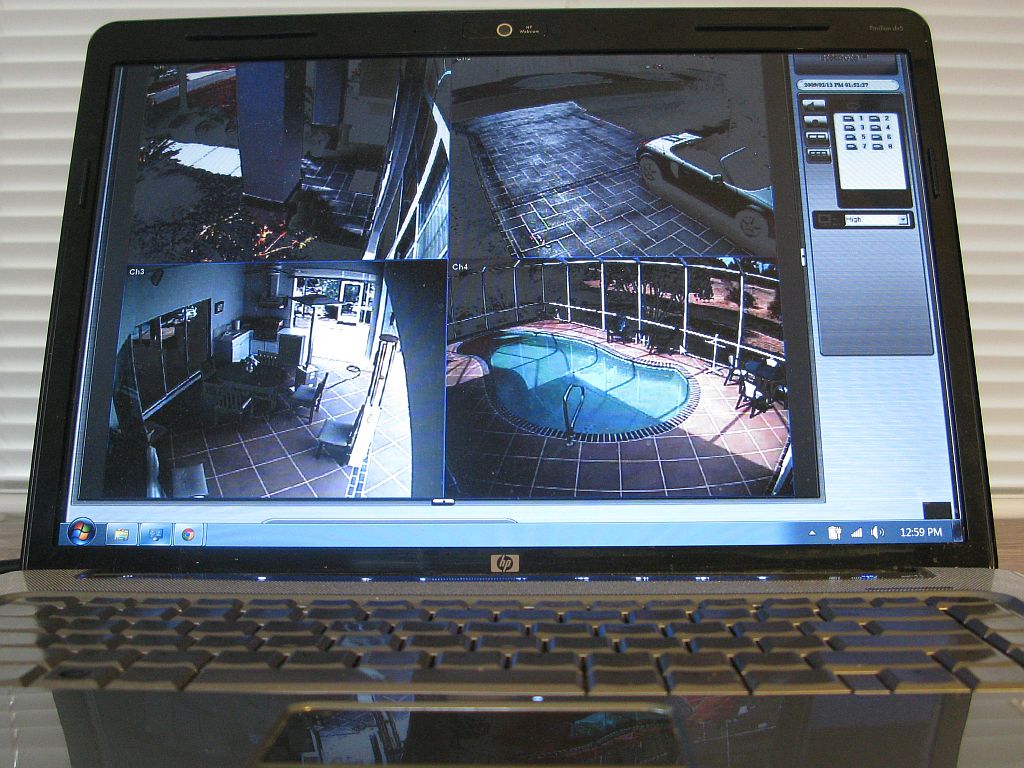
A laptop’s webcam serving as a home monitoring system, February 2013.Intel Free Press / Wikimedia
Nextdoor advertises itself as a “private social network for your neighborhood,” an app and site that allow residents to ask questions of their neighbors and post advertisements or missing-cat flyers: a quicker way of obtaining or disseminating information than going door to door or yelling over garden fences. The Twitter account @bestofnextdoor dutifully collates what goes wrong when digital distance leaves neighbors feeling they can vent their true feelings without reserve: testy conversations about cooking smells, noise nuisance, and untidy-looking streets become flame wars for repressed middle-aged homeowners.
One trope that often recurs is the hyper-paranoid poster uploading blurry black and white footage from their home security system, asking neighbors to identify people in the images. In one recent post, a man said that his Ring security cameras had captured footage of the individuals who had stolen his porch cushions; he then had replacement cushion covers printed with the images from the security cameras. (One hopes this cycle kept repeating until the twentieth set of cushions produced a dizzying Escher-esque effect.) Another poster showed an image of teenagers holding up their middle fingers to the camera and asked if this “was a gang sign” rather than evidence that people do not appreciate being filmed while walking on a public street.
The proliferation of home security systems, the ease with which apps can be developed, and the cheapness of basic cameras have enmeshed such systems in our digital lives. There are several worrying aspects of this personal surveillance set-up that elicit far less attention than the privacy and data ramifications of Google Home or Amazon’s Alexa.